Written by Sam Baggenstos, Conservation & Wilderness Associate
Greetings,
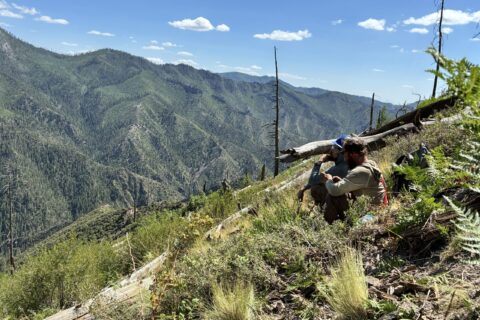
The crew’s most recent hitch was split equally between two geographic areas: the first four days in Queen Creek near Superior, AZ and the last four days in Tucson.
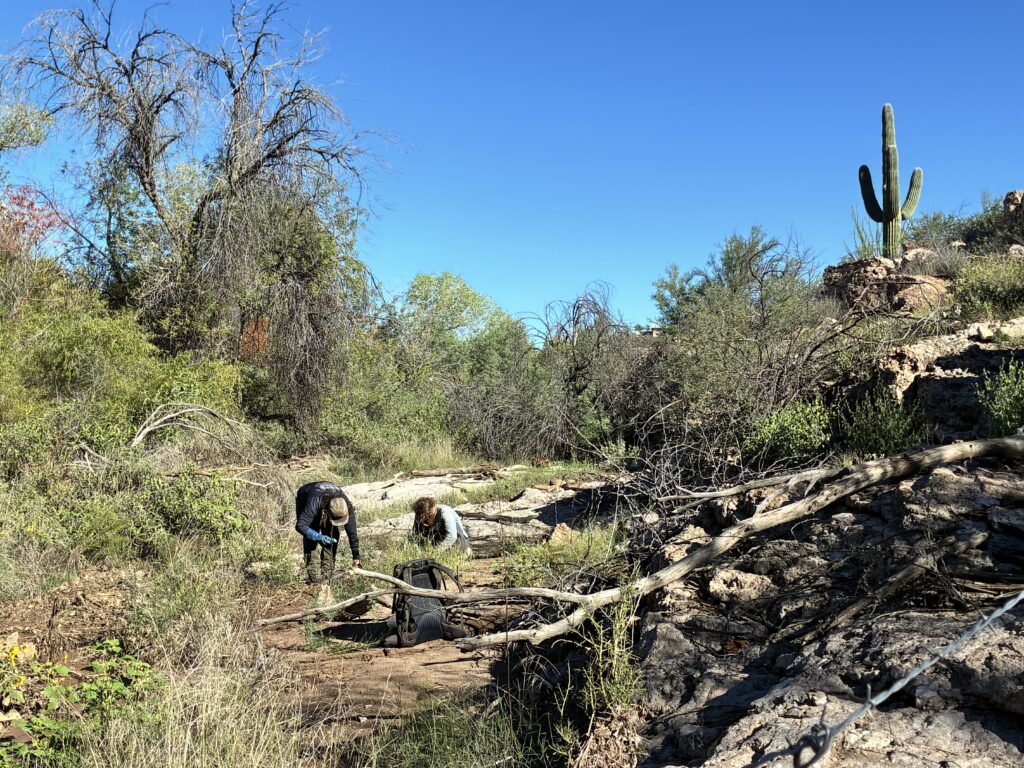
For the first half of the hitch, we continued the invasive plant removal project along Queen Creek that Wild Arizona started several years ago. The project has come a long way since then. Where once were dense groves of tree of heaven, African sumac and date palm are now open areas that are starting to fill in with annual vegetation. Over 95% of the regrowth were small seedlings or saplings less than a couple feet in height. And among all of these plants many of them are tiny plants that are less than three or four inches in height.
One of the plants that was a particular focus of this hitch was the Mexican Palo Verde. If you live in Tucson or other low elevation places nearby you will probably recognize it. It’s the species of Palo Verde that has the long drooping ribbon-like leaves. All other species of Palo Verde in this area have much stubbier leaves. Mexican palo verde, or MPV for short, has a unique cluster of thorns at the base of each leaf: two short thorns branching to the left and right like thorns and one longer one sticking out straight. Once the plant is a foot tall or so it is fairly simple to tell it apart from the other plants nearby in Queen Creek. However, when it is very small (one to five inches) it is very similar to a particular species of mesquite that grows along the creek. We are still learning about this plant, but our current understanding is that the best way to differentiate MPV at this stage is by looking at the cotyledons, which are the first leaves that emerge from the seed in the ground. The MPVs have narrow cotyledons and are fairly smooth, unlike other plants at this stage which tend to have circular cotyledons that are sometimes furrowed or wrinkly.
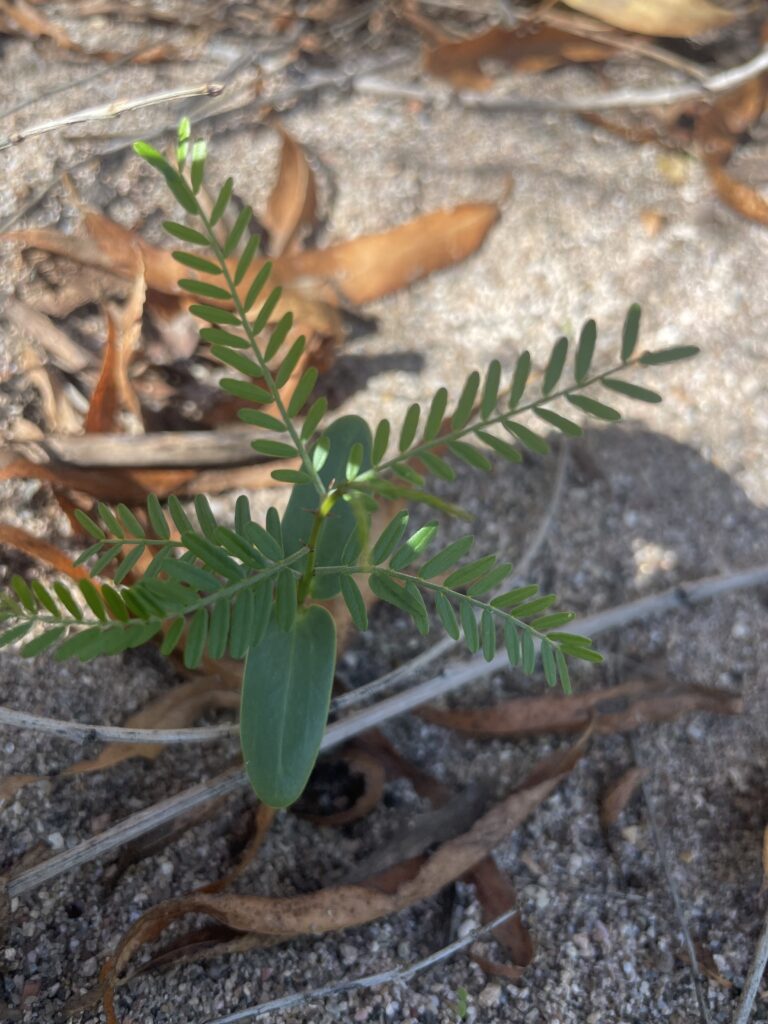 A small Mexican palo verde plant; notice the narrowness of the seed leaves. Photo by Sam Baggenstos
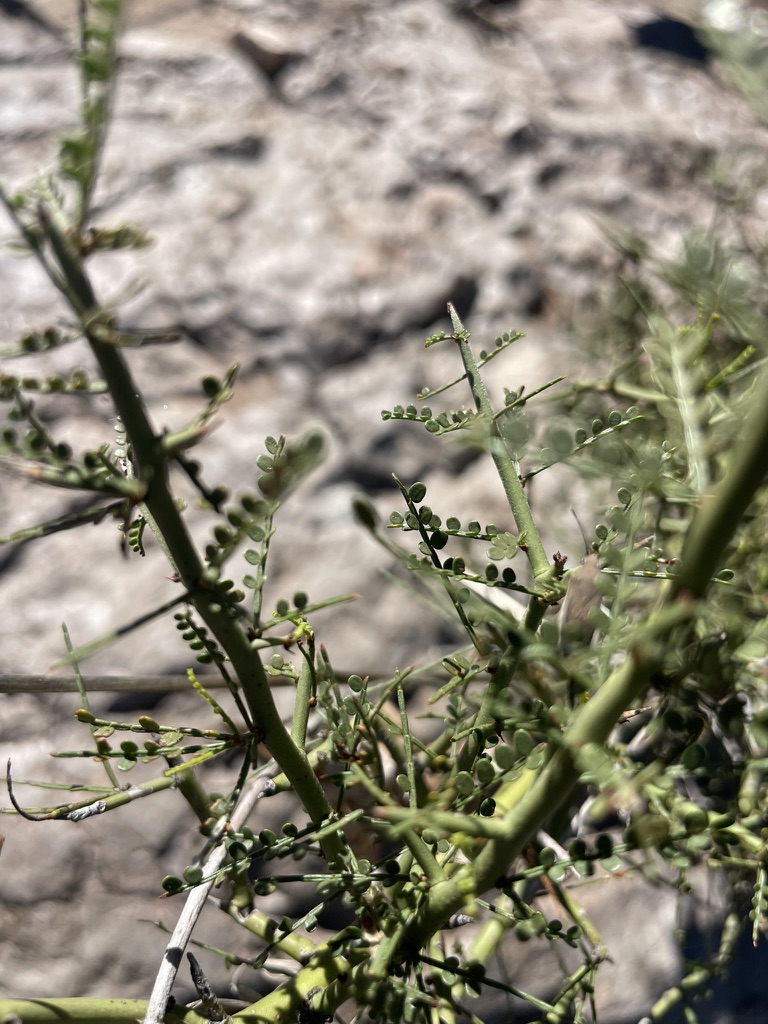 Foothills palo verde plant. Photo by Sam Baggenstos
In our four days at Queen Creek we walked the creek three times, treating with herbicide or hand pulling over 2100 stems of invasive plants. In particular, we treated 113 stems of tree of heaven, 1606 stems of Mexican palo verde, 424 stems of African sumac and 8 palm tree stems.
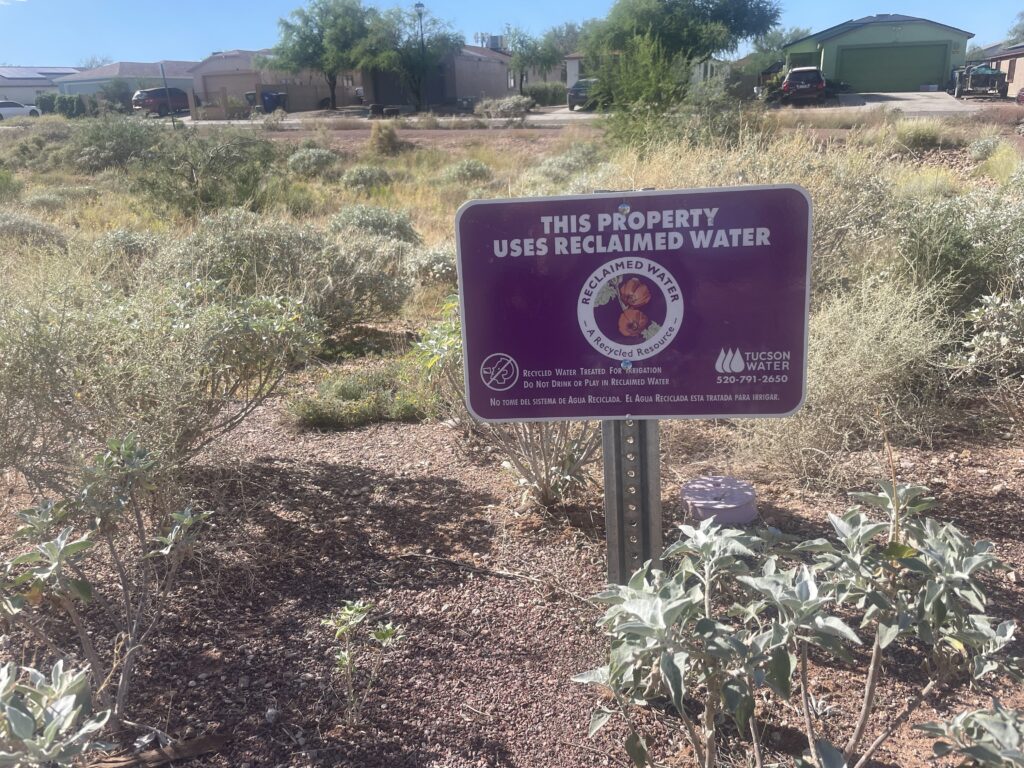
For the second half of the hitch we worked at the Sunland Vista Site, one of the two Green Stormwater Infrastructure (GSI) sites that Wild Arizona manages for the city of Tucson. This time around we focused on two things: stabilizing the sides of some of the basins with rock structures and the removal of invasive plants.
When water flows quickly down a slope (like during a monsoon rainstorm), it can tend to take dirt with it. When this happens over and over again, trenches can begin to form. This in turn speeds the water up which can cause more erosion of dirt. In this way the damage starts to escalate. One way of the ways we chose to address this damage at the Sunland Vista site is by digging in a line of rocks perpendicular to the hill side. This slows the water down, holds the dirt in place and fans the water out into a sheet flowing down the hillside (this is called sheet flow).
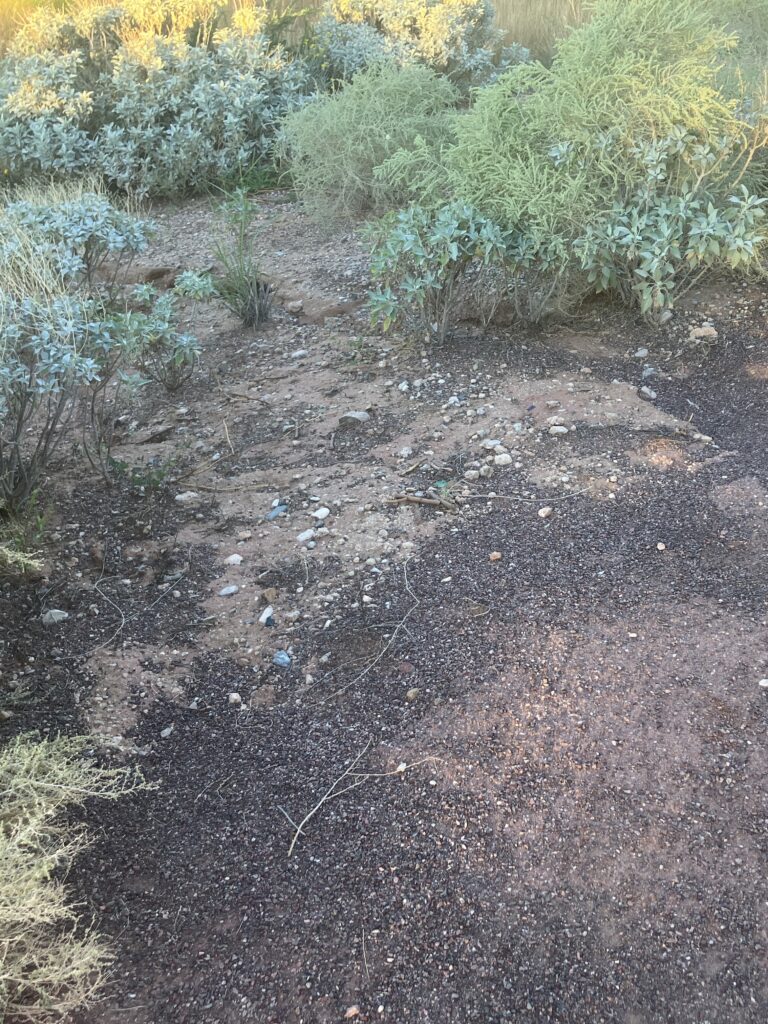 Before: no work done. Photo by Kile Stumbo
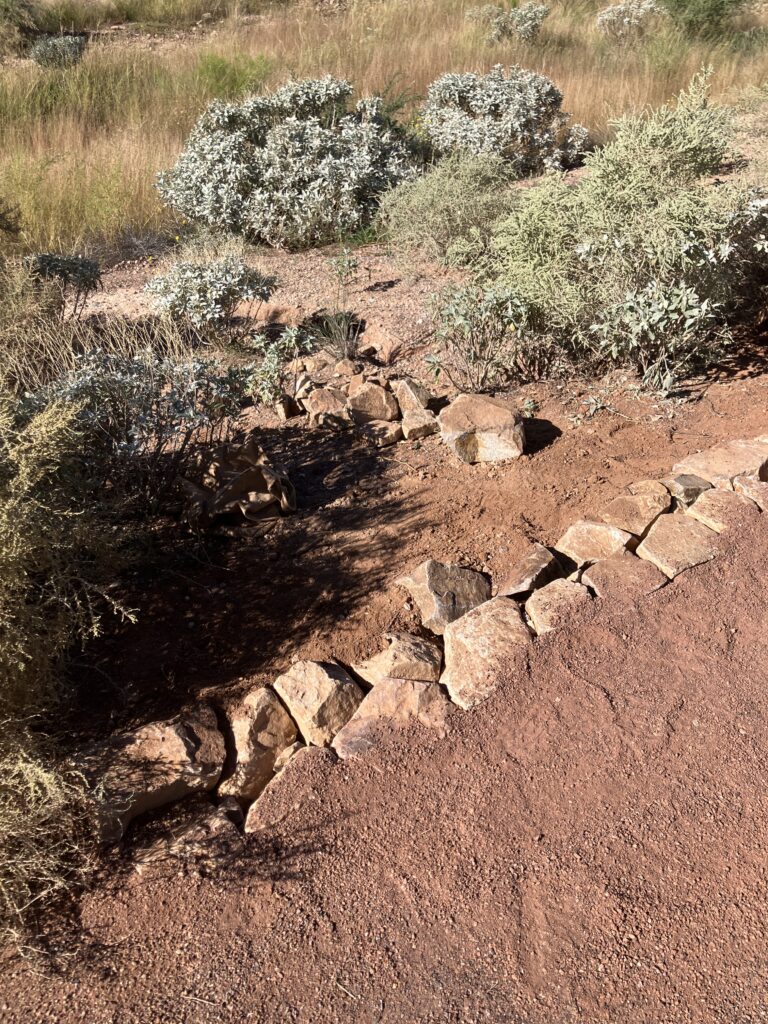 After: erosion control structures installed. Photo by Kile Stumbo
In all we armored around 175 feet of hill side this hitch. This not only helped repair the damage from summer monsoon rain storms but will help prevent further damage from any fall or winter storms. We also removed a variety of invasive plants from four of the basins including tick grass, buffel grass, bermuda grass, Mexican palo verde, puncture vine, Lehmans lovegrass, cheese weed, button grass, Russian thistle and eucalyptus. It was very satisfying to look up the wash after several days of work and only see a veritable garden of native plants exploding in growth from the summer rains.
All in all, we had a productive and satisfying hitch.
‘Til next time! – Sam