Written by Max Skolnick-Schur, Wild Stew Field Crew Leader.
This hitch, we returned to the Allie Canyon Trail #100 in the Gila National Forest to continue post-fire Burned Area Emergency Response (BAER) work following the 2025 Trout Fire. This was an abbreviated partial hitch, totaling just three workdays in Allie Canyon.
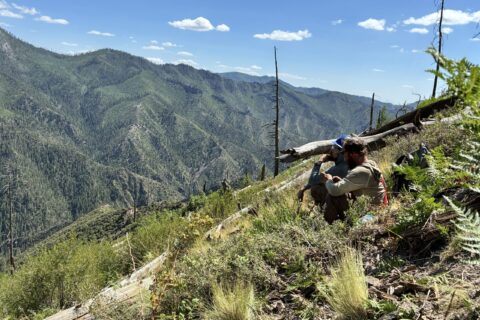
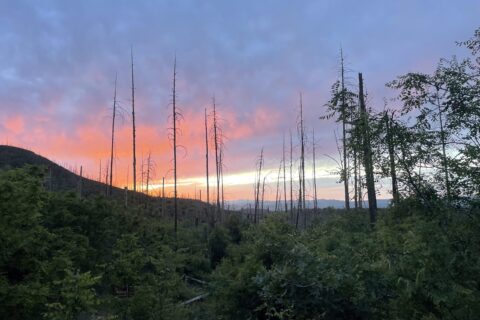
Earlier this year, a Forest Service falling crew removed hazardous fire-damaged trees throughout the canyon, leaving numerous tall stumps along and near the trail corridor. Continuing from where we stopped during our previous hitch in late May and early June, we worked farther down the canyon cutting these stumps closer to ground level and cleaning up the trail to improve safety and aesthetics.
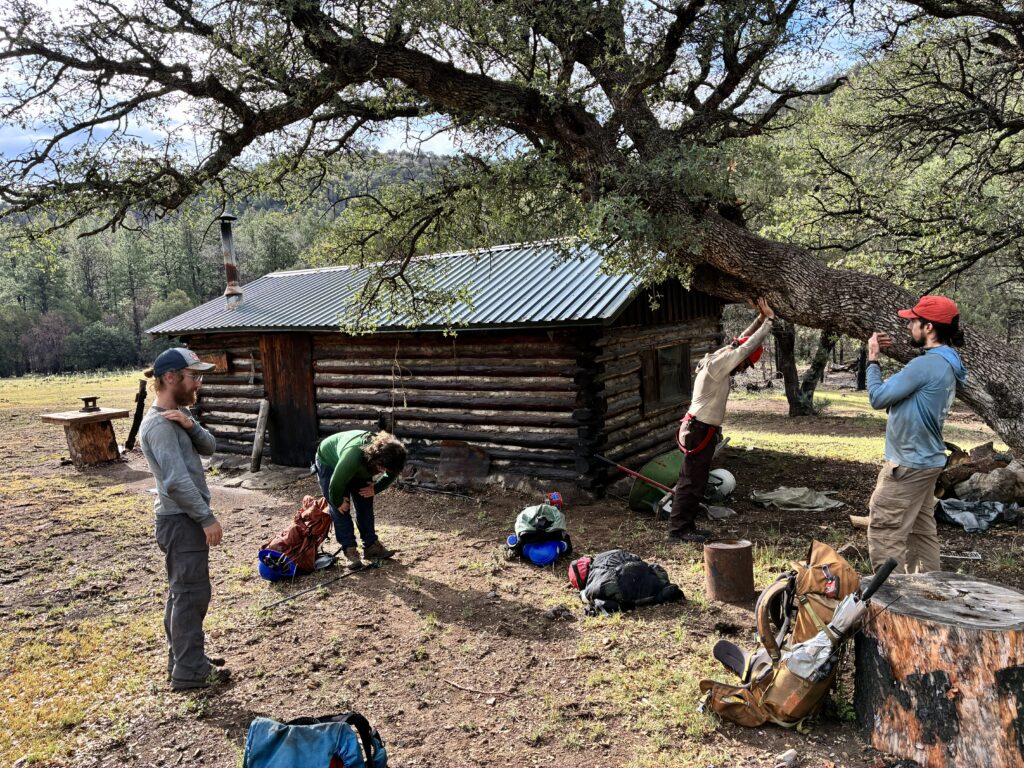
Reaching the worksite required a 5.5-mile hike while carrying chainsaws and other trail tools. We hiked the full distance in and out on the first day, but Forest Service staff were able to provide UTV transportation over the steepest initial three miles after that, giving us more productive time at the worksite.
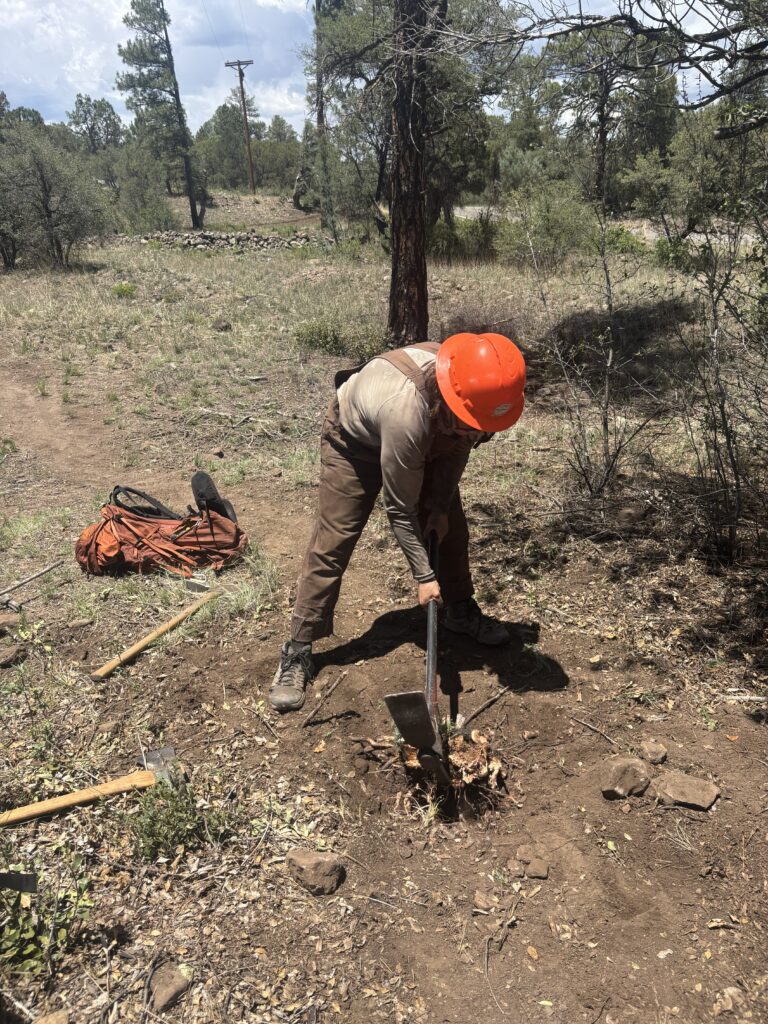
During our time on the main project, the crew cut 190 high stumps closer to ground level, lowered 33 cut logs as part of erosion mitigation work, and cleared seven trees from the trail. We also improved drainage, tread, brushing, and trail marking, including building eight cairns and three drains and completing approximately half a mile of tread and brushing work.
Because the Trout Fire removed vegetation and changed how water moves through the watershed, flash-flood risk in Allie Canyon is significantly elevated during the summer monsoon. Forest Service staff asked us to be especially cautious when storms were building. When conditions became unfavorable, we left the canyon bottom and shifted to a safer fallback project near the Wilderness Ranger District office. This reduced our time on the main project but still allowed us to make good use of the workday.
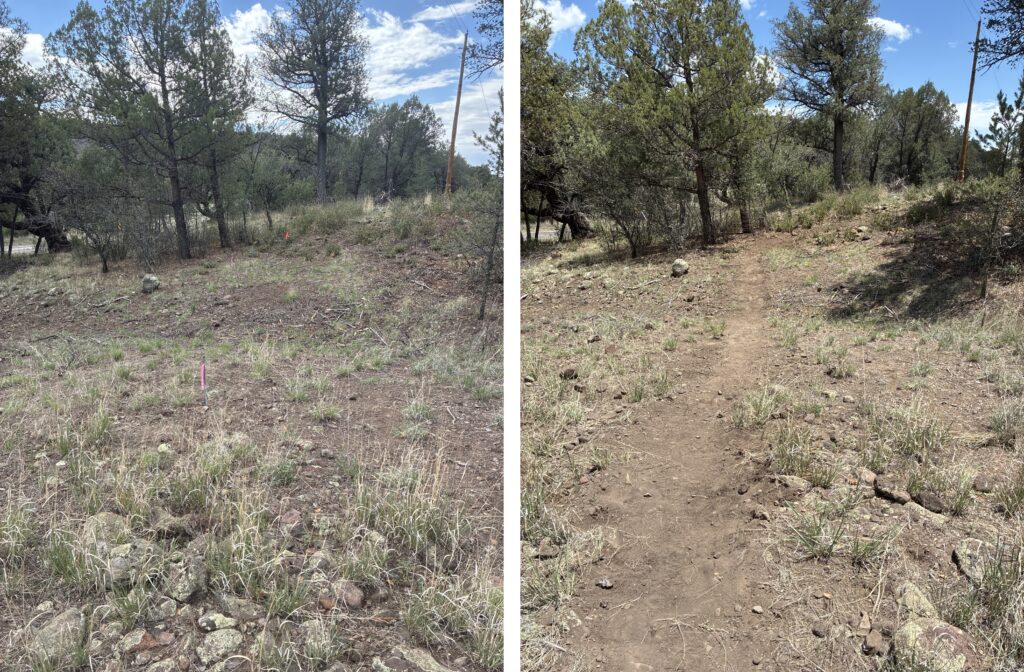
For the fallback project, we constructed an approximately 500-foot connector between the ranger district office parking area and the beginning of the Allie Canyon Trail. Previously, visitors had to park on the opposite side of NM Highway 35 and cross the highway to reach the trailhead. The new connector will allow hikers to park at the ranger district office and access the trail more safely without needing to relocate their vehicle. Several crew members also scouted and assessed the two legs of a possible Allie Canyon loop from the trailhead for potential future improvements.
For the second half of the hitch, the crew transitioned to City of Tucson Green Stormwater Infrastructure (GSI) work at Sunland Vista Park. A recent large rain event had eroded sections of the pathway and damaged portions of the stormwater basins.
The crew repaired eroded areas and drainage features, cleaned up storm damage, removed trash, cut and moved fallen branches, and improved the pathway corridor. This work helped restore the site and improve how water moves through the basins and surrounding landscape.