Written by Julie Polovitch, Wild Stew Field Crew Member.
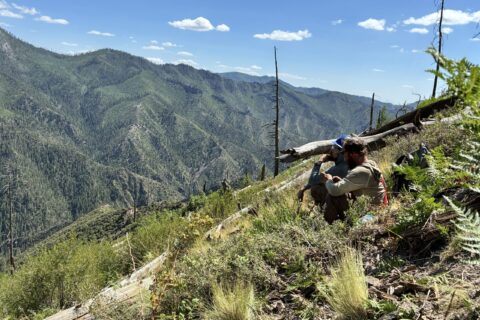
This past week, we headed into the high country of the Chiricahua Wilderness. Our arrival aligned with the arrival of monsoons, which periodically provided a welcome reprieve from the sun-exposed work site. Our primary objective was to retread the section of the Crest Trail #270C primarily between Juniper Spring and Aspen Saddle. This project was part of a multi-year effort to improve the quality of the Chiricahuas’ premiere high elevation trail and connect the greater Crest Trail network into the previously restored South Fork Trail #243 that connects in several miles further out along this trail.

We worked in tandem to retread 0.7 miles of Crest Trail between the Snowshed Trail and Aspen Saddle, which was narrow, steeply cross sloped, and often impeded by grasses. We additionally did spot brushing as needed, and cut 12 logs from the Crest Trail between Junction Saddle and Aspen Saddle.


The Fourth of July fell on day three of this hitch, and thus we came prepared with the proper festive cuisine: hot dogs, baked beans, and various accoutrements. Fireworks displays from Douglas, Sierra Vista, and Tombstone were visible a short walk from camp at Cima Saddle.

In a few places, the crew also reconstructed portions of the trail that had over time slumped below its original contour. The largest contiguous section of reconstruction lay below the junction with Anita Park Trail #359. Working south towards Chiricahua Peak, we retreaded 200+ feet of the Crest Trail #270, shifting the trail back upslope to where it originally was, establishing a more intuitive, easy-going, and erosion-resistant path.


Our final morning entailed a different sort of re-benching. One of the log benches around the fire ring/dining area outside Cima Cabin was especially rotted out, so a replacement was in order. Before we finished packing up and hiking out, we employed a nearby downed tree and Jonathan taught the crew how to hew the log’s surface in order to craft a level seat. It was a pleasure to give back to this historic site, which has served as a base camp for decades of trail and fire crews and personally offered us refuge from the monsoon rains.