Written by Rebekah Sutherland, Assistant Crew Lead.
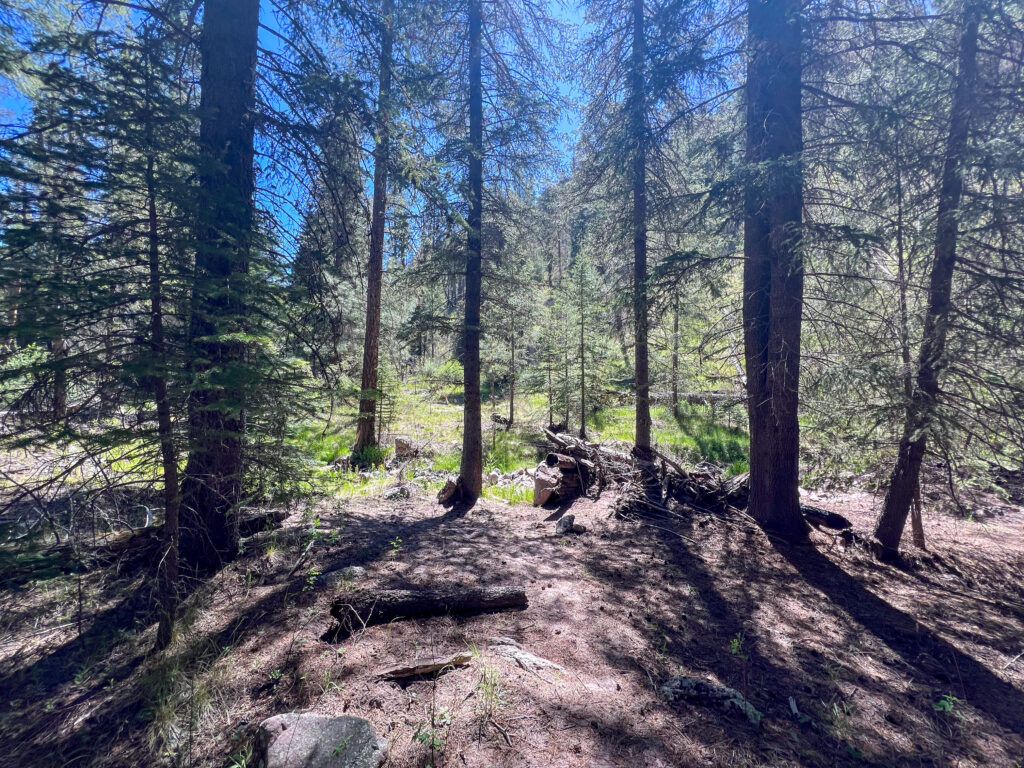
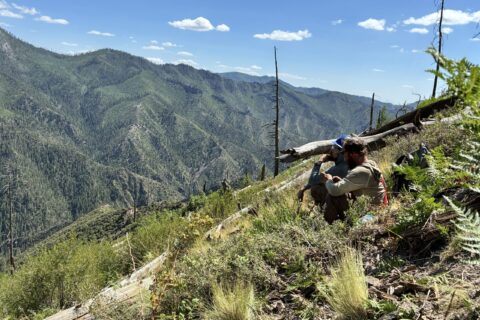
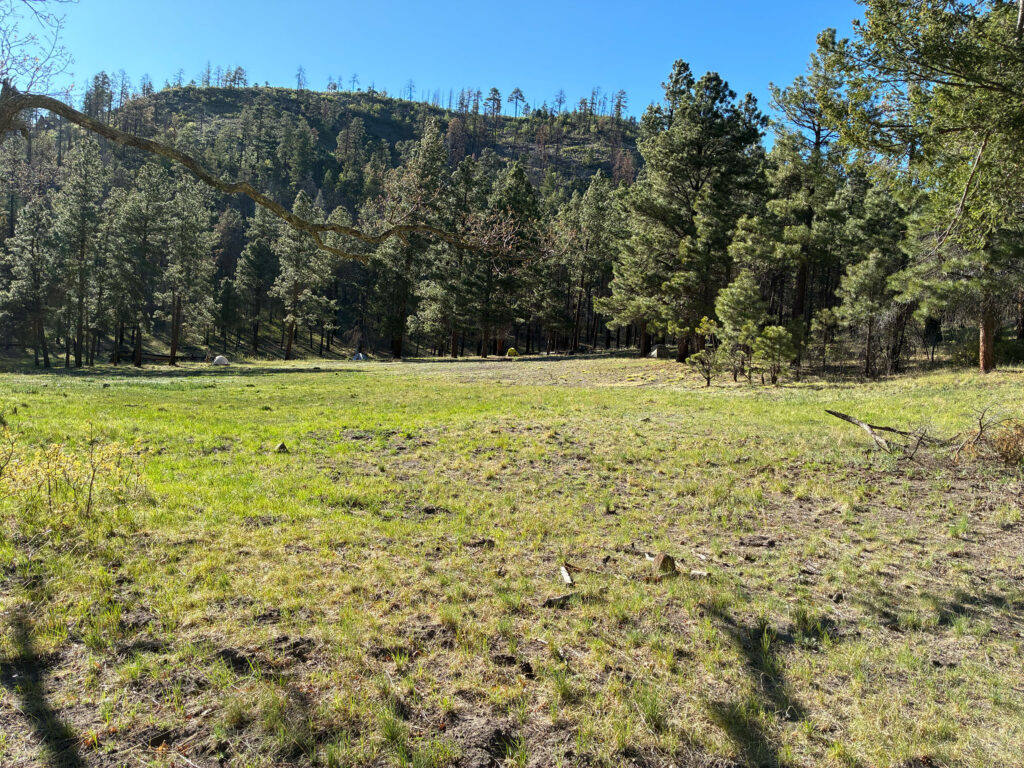
This past hitch, the Wild Stew Field Crew packed up their bags, and headed into the beautiful backcountry of the Aldo Leopold Wilderness. At the direction of our partners at the Gila National Forest and the Continental Divide Trail Coalition, the crew set out with a goal to improve tread and remove large deadfall from across the Black Canyon Trail, a section of trail that doubles as a portion of the Continental Divide National Scenic Trail. Weighed down by 3 crosscut saws, axes, loppers, tread tools, 8 days of food, and more, crew members hiked in on the steep and exposed Rattlesnake Trail, stopping to cut high logs along the way with the hope of making this access trail passable to stock animals. This will give the forest and its partners the option to use pack strings to support work on multiple higher elevation trails in the future. After a hot day of hiking up hill, our campsite at Reeds Meadow was a sight for sore eyes. Beautiful green grass, tall (living) pine trees, and tasty spring water made this spot the perfect home for the week.
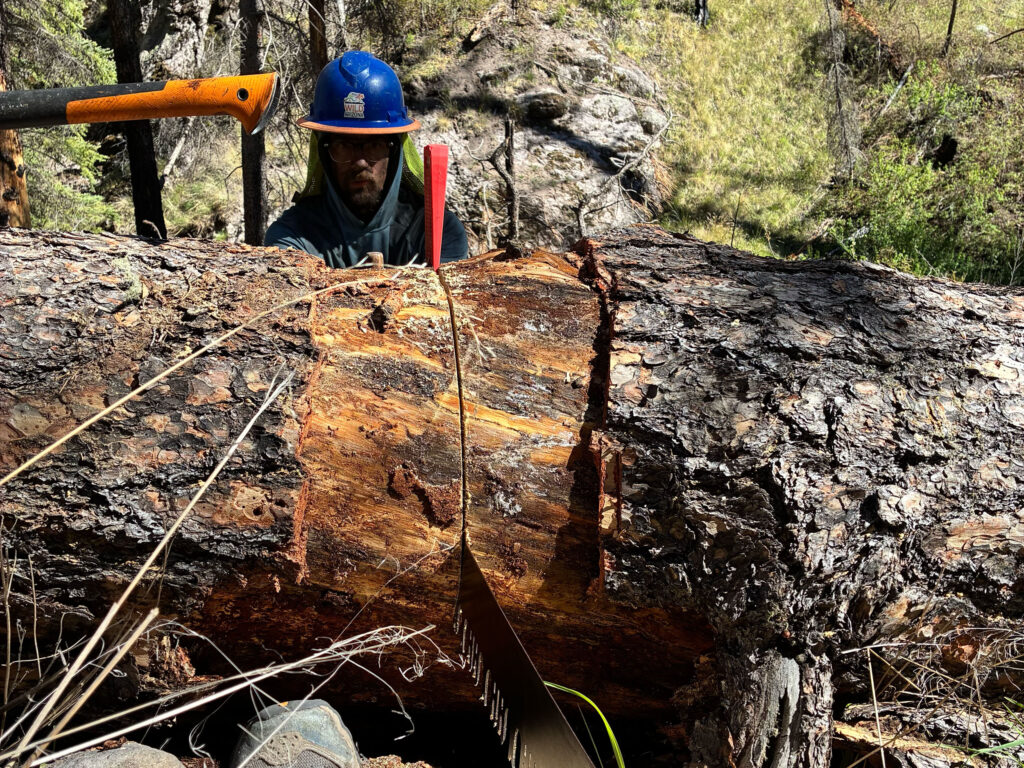
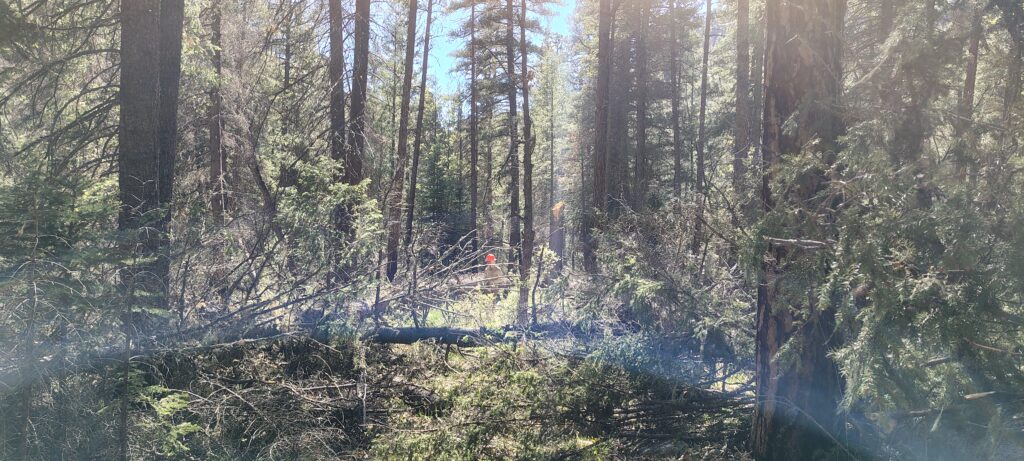
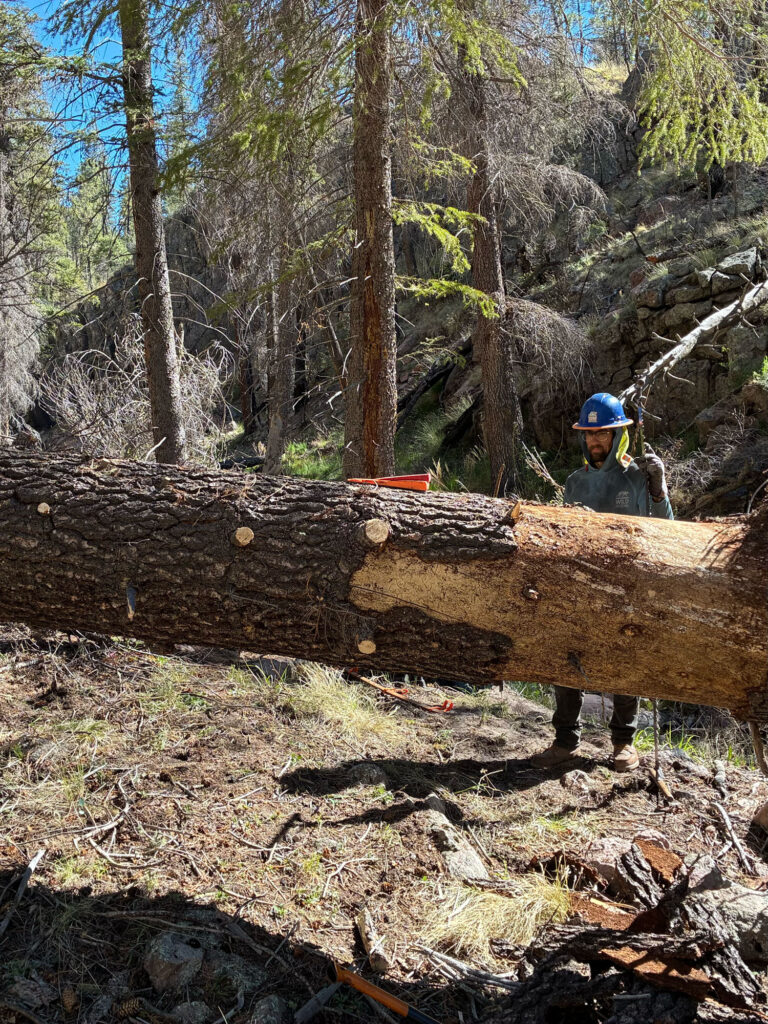
Along the Rattlesnake Trail, the crew cut 18 logs, but that was just the start of our crosscutting this hitch. For much of the rest of our hitch, sawdust flew and 95 logs were cut out of the priority section of the Black Canyon Trail, opening up 2.5 miles of trail for easier travel. At the bottom of that 2.5 mile section sat the Black Canyon Box, a section of high cliff walls and narrow canyon where the trail is forced out of the canyon bottom to traverse the steep hillside above. In this section, the trail was greatly narrowed by erosion, and needed some extra attention, so crew members retreaded that portion of trail, totaling 0.39 miles. With these two work priorities done (logouts and retread), the crew was also able to tackle 1.12 miles of brushing, 0.74 miles of spot treading, 6 drain constructions, and 8 cairn builds along the Black Canyon Trail.
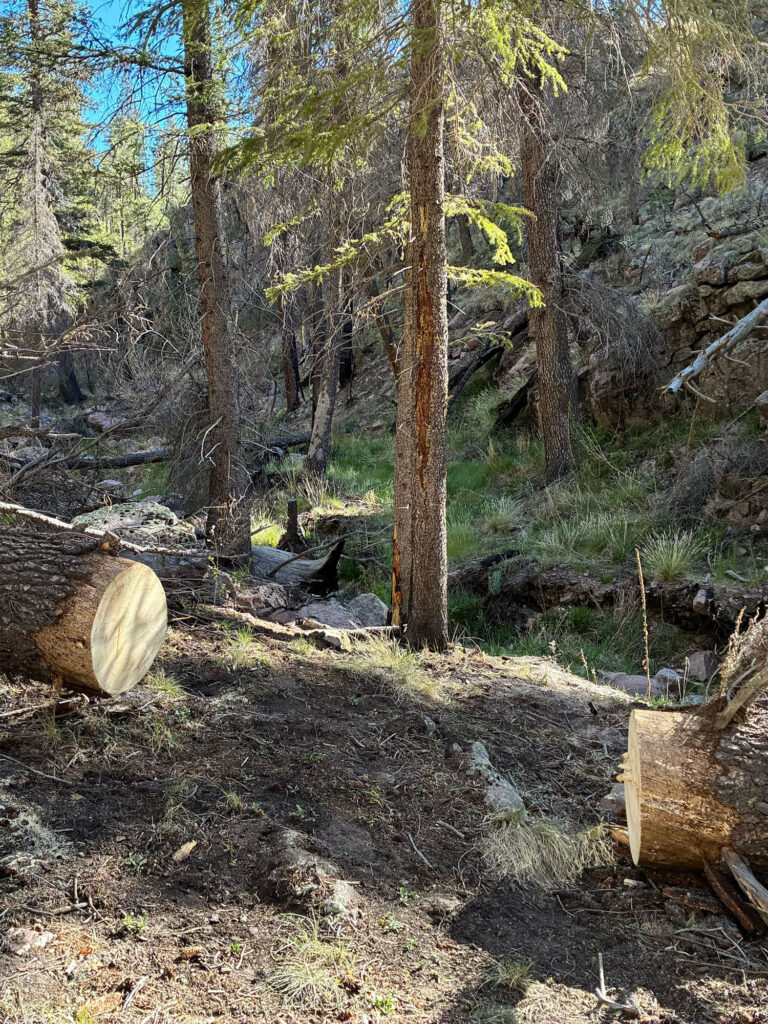
Overall, this hitch felt like a dream at times. Waking up in a lush meadow each morning, working along a canyon creek with dramatic rock formations above us, and falling into the rhythm of the crosscut, we didn’t know work could feel so peaceful. That is, until we were awoken from our dreams (literally) by howling winds. The last couple days of sustained 35+ mph wind kept us on high alert during the day, and awake at night, as our tents tried their best (and often failed) to stay up. We powered on, and made it through with the help of cookies brought by our Field Operations Director, Jonathan, and by entertaining ourselves by talking through the plot points of all the Fast and Furious movies. The human memory can recall amazing things when deprived of connection to the outside world for days at a time.
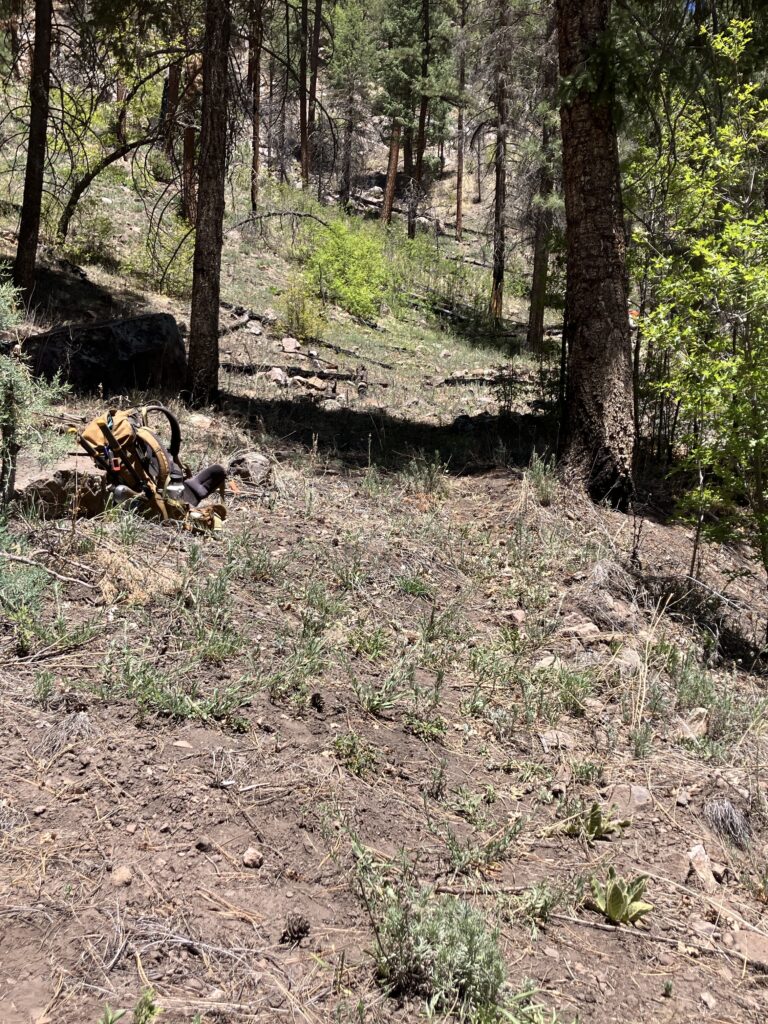
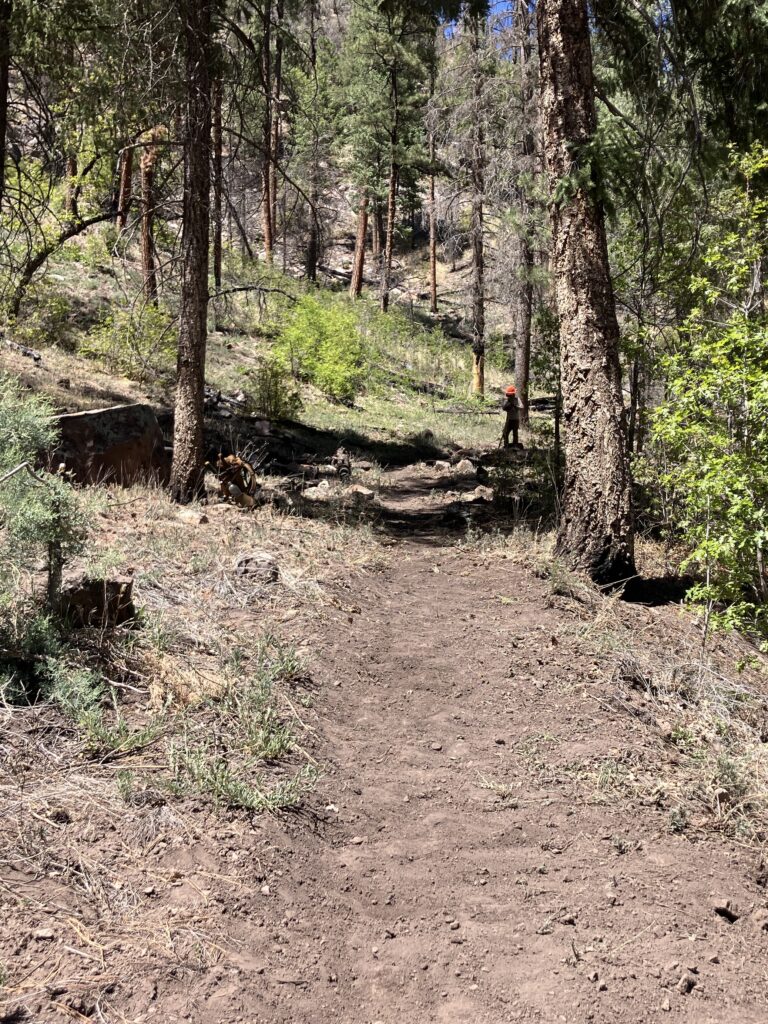
On our last day waking up in Reeds Meadow, we had a few hours to do a bit of work on a section of the trail near camp, a small connector that had begun to disappear. We logged out 7 trees, brushed the length of it, built a couple cairns, and treaded the first 210 feet, with the hopes of setting up a future crew for success to finish the work. As we hiked back out the way we came on the Rattlesnake Trail, we noticed several new trees down across the trail, a result of the high winds the area was experiencing. This felt like a good reminder that the work we do is needed and important, and that consistency and teamwork amongst crews and organizations is what will keep these incredible areas accessible for years to come. We look forward to coming back to the Black Canyon Trail someday and seeing how our work and the work of crews to come will help bring new people to this beautiful place.