Written by Dexter Kopas.
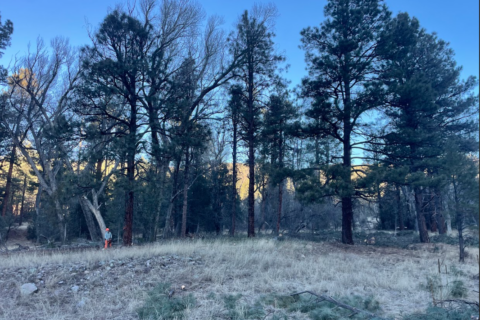
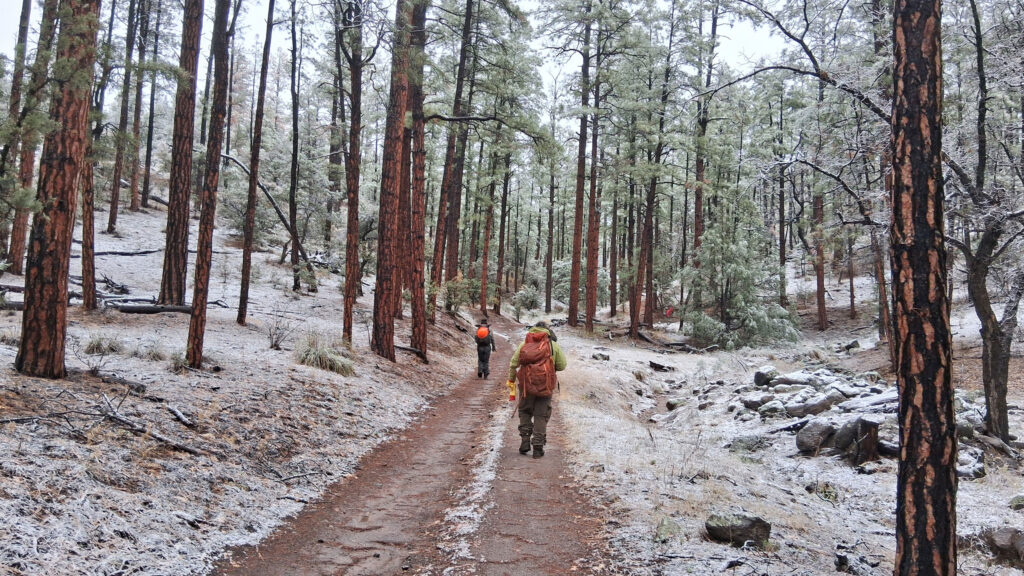
Joyous voices ring out! The scourge of the Arizona summer is over! Winter has come! Gone is the burn of the scorching sun, replaced by the loving sting of cold air on one’s face. Hooray! To many desert rats, this tradeoff is met with a hint of regret, but not to this friend of the frigid. I welcomed the mix of winter weather out in the White Mountains with great praise, as the Wild Stew Field Crew joined together once more to work on restoring the Dry Blue Creek.
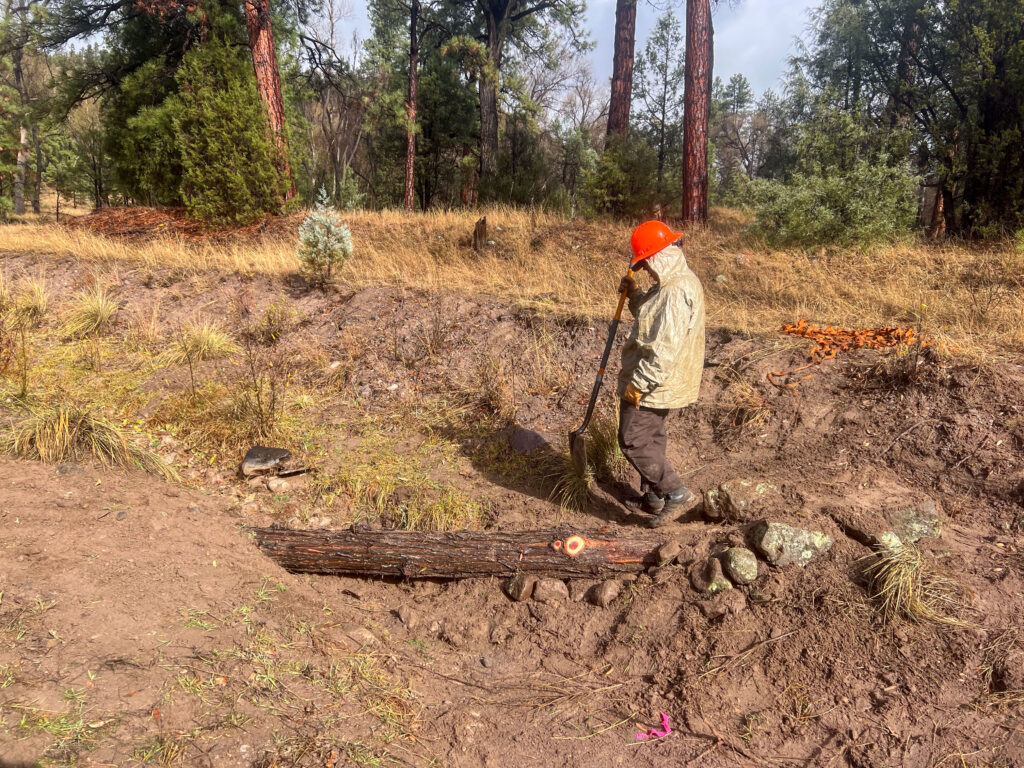
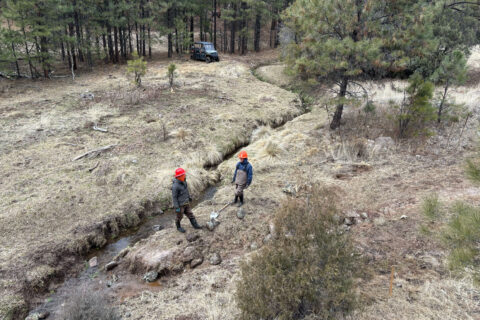
After a long drive out to our worksite along the Arizona/New Mexico border, our work began on a rainy day with some educational demonstrations from our collaborators from Natural Channel Design Engineering. Mark Wirtanen and Chris Liszewski answered our many questions and showed us all how to build log vanes and boulder clusters. They told us that despite some downcutting, the stream was, structurally, in pretty good shape. The banks are covered in native plants, and the stream meanders across a floodplain, spreading into wet meadows in places. The main issue was insufficient channel diversity, i.e. the stream is mostly an open, free-flowing channel without objects in it. This doesn’t allow a wide variety of animal species to thrive. So, the purpose of our in-stream structure efforts was mostly to create a variety of habitat by changing how the water moves, on a small scale.
Log vanes are an angled log built across a stream to both stabilize the channel and enhance fish habitat. We used juniper logs harvested from our meadow thinning component of the project (more on that later). The logs are placed at an angle and tilted up on one side, then dug into the banks and buried along with heavy rock to keep them in place during big flood events. The angles of the log work to direct stream flow away from one side of the stream channel, usually an eroding cut bank we want to protect. Fish then like to hide beneath the log. I quite enjoyed our work building 10 vanes. There’s math in figuring out the angles to lay the log, precise digging to lay it down, teamwork to carry the log into place, some rock work to lock the rocks around it, immediate feedback seeing how the water interacts with the log, and you get to play around in the water and mud.
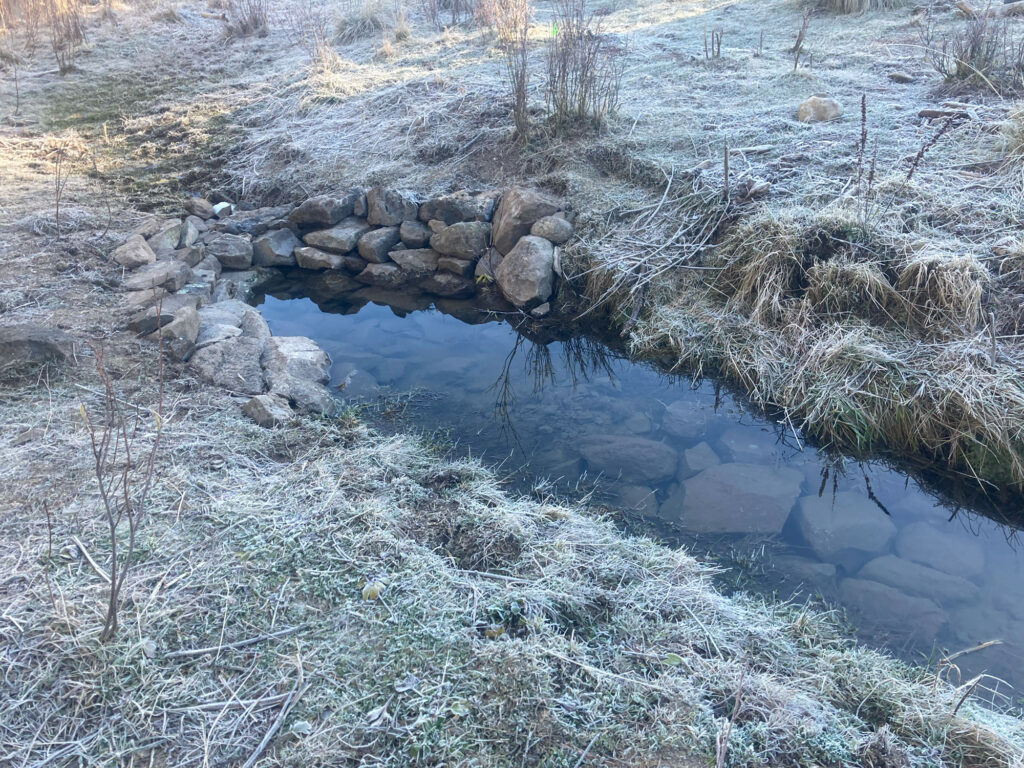
The other main structures we built were 30 boulder clusters. A bit more straight forward, these are just what they sound like: a grouping of large rocks set into the stream to encourage scouring and spots of reduced water velocity, and to create habitat. Often we could see little fish swimming amongst our rocks right after we layer them down.
Additionally, we built two large Zuni Bowls to stop head cutting, and one of our old friends, the one rock dam. It was a whole new take on a familiar task when building rock structures underwater “in Braille”, often obscured by murky, finger-numbing waters.
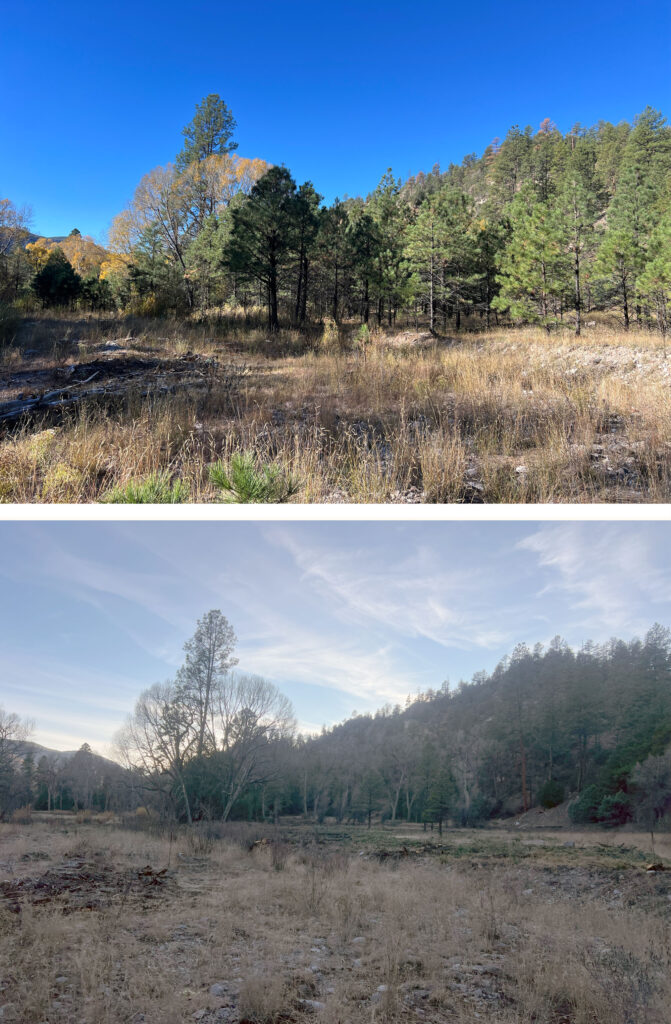
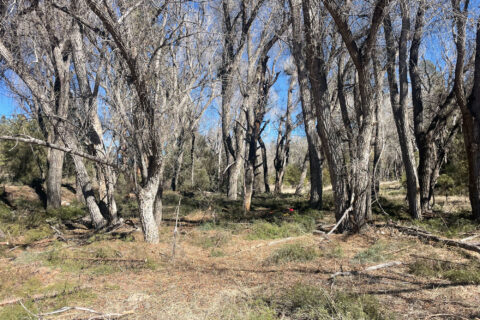
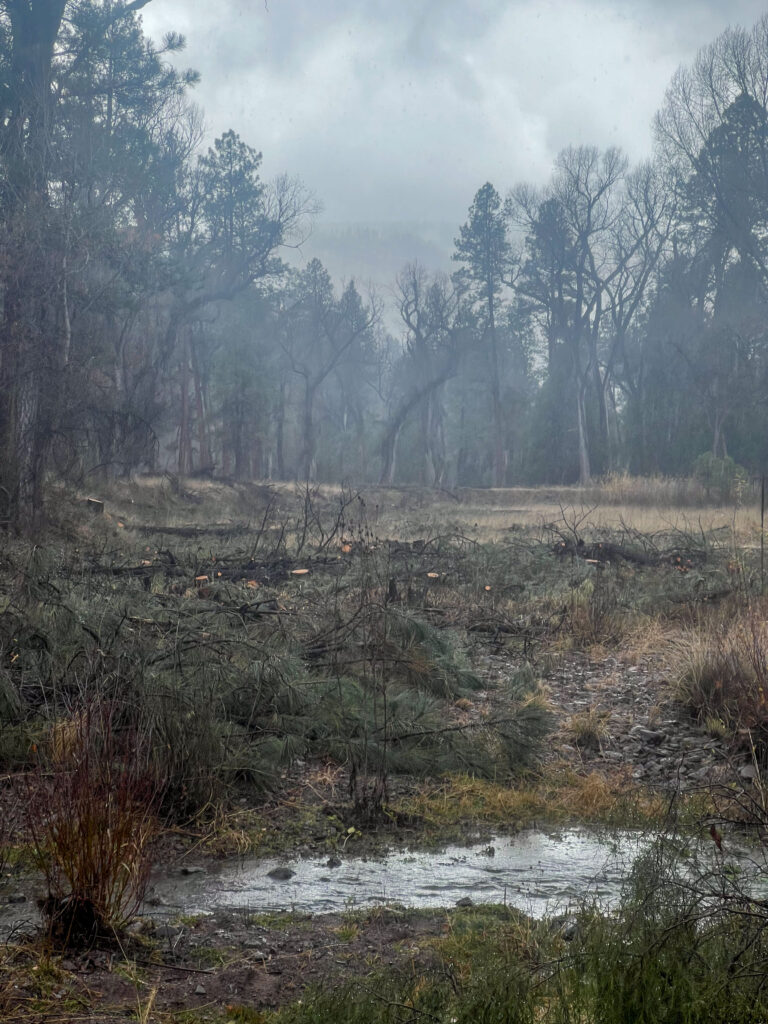
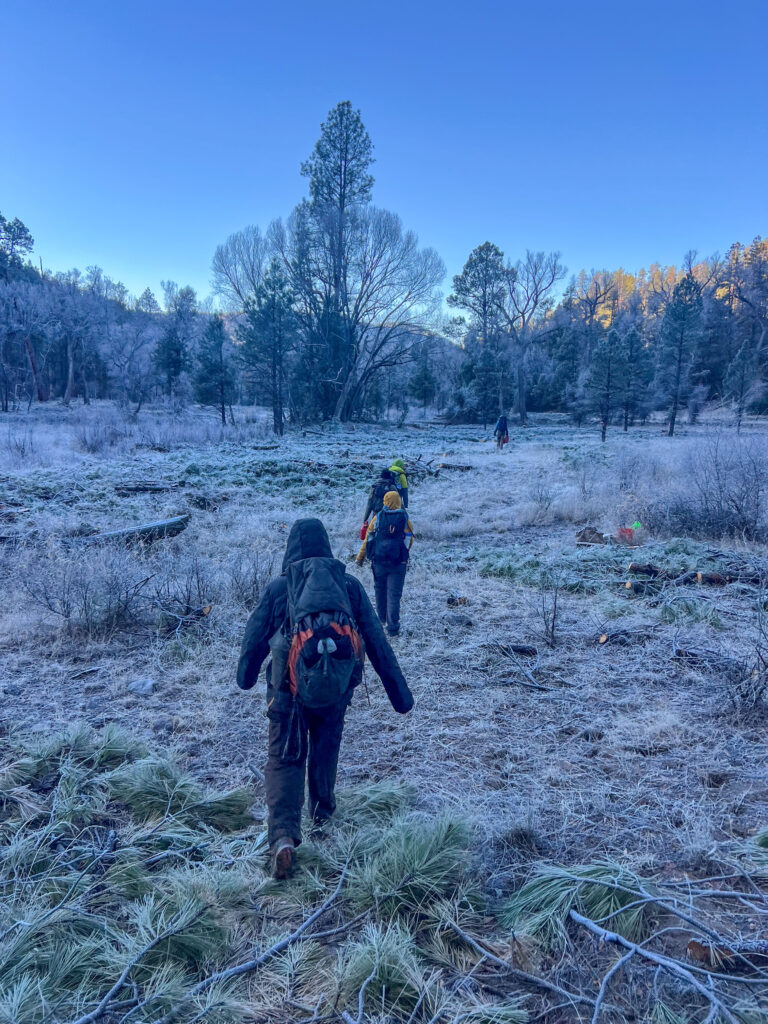
After finishing the full prescription of in-stream structures, we returned to the meadow thinning we started last year. With the goals of protecting cottonwood habitat and creating a fire break, we felled another 1,344 pine and juniper trees. While that number is impressive, we still have many more trees to cut and structures to build further up stream. It will be satisfying to see the impact of our work over time as we continue restoring the full stream.