Written by Sam Baggenstos, Wild Arizona’s Conservation & Wilderness Associate
Every summer, dozens of people apply to be a part of the Coronado National Forest’s Youth Conservation Corps program. And each year the main reasons people give for applying are that they love nature and they want to spend more time outside. And YCC delivers that. For much of the summer they live outside, work outside and sleep outside. They wake up with the sun and go to bed when it gets dark. They endure the hot days and celebrate when it rains. Nevertheless, YCC is not just about being outside. It’s also about personal growth and self-discovery. 2025 YCC crew member Yah’zie is a good example of this.

Hailing from the quirky town of Bisbee, Arizona, Yah’zie will be starting his senior year of high school in the fall. If you know Yah’zie you know about his winning smile and his gentle demeanor. He is the sort of person who is just as likely to obsess about an interesting feather as he is to fixate on a favorite meme. Recently, he has been rocking a mullet which he sometimes supplements with two small “jedi” braids on either side of his face.

Yah’zie’s YCC journey began over a year ago in June of 2024 when he walked through the front doors of Rucker Station. Right away he came across as shy, quiet and rather uncertain. He seemed excited to be at YCC, but was unsure how he would fit in or whether it would be a good experience. Nevertheless, Yah’zie began the patient work of making friends, learning new skills and playing his part in the YCC community. And that work paid dividends. In those six short weeks Yah’zie gained skills in building trails, navigating relationships and being willing to show his authentic self to those around him.
At the end of the summer in 2024 Yah’zie wrote this about his experience: “YCC […] has made me feel confident and changed my view on what job I could be doing. I could work outside, somewhere I want to be.”

Fast forward one year and a different sort of person arrived in Rucker Canyon than the previous year: goofy, chatty—and most of all—confident. This confidence showed up in multiple areas. If we were building a trail he grabbed a tool and showed the new crew members how to “outslope the tread” so it would drain properly. If we had just finished dinner Yah’zie jumped right away into completing his chore whether that was doing the dishes or tidying up the common area. And most importantly, he let his kind, joyful and sassy personality shine on those around him.
“I learned many things about myself,” Yah’zie wrote while reflecting on the summer. “[and] self-preservation and self-priority are among them. I stopped trying to accommodate myself for others’ worth. I learned to take life at my own pace […] I learned that life can be optimistic.”

Clearly, being in constant communion with self, others and the outdoors has a transformative effect on people. However, you might be wondering: what exactly is a “Youth Conservation Corps”, and what sort of things happened at Wild Arizona’s 2025 program?
Simply put, the Youth Conservation Corps (YCC) is a federal program that provides the opportunity for high school students to make money while working outside, exploring the outdoors and developing life and career skills. The work focus of each particular individual YCC program varies, but it can include things such as trail work, invasive plant management or facility maintenance. The vast majority of YCC programs are not residential, meaning that each evening (or sometimes each weekend), students must return home. This is not the case of Wild Arizona’s program.

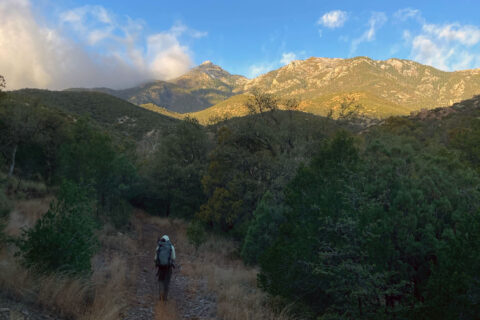
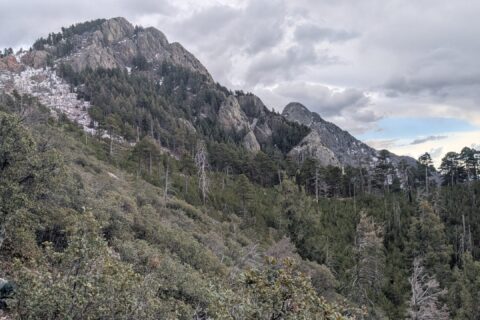
Since the summer of 2021 Wild Arizona has taken on the bulk of the responsibility of running a Youth Conservation Corps for the Coronado National Forest. This particular program is a six-week residential program run in partnership with the Douglas Ranger District. The home base for the program is a Forest Service administrative site located in Rucker Canyon in the Chiricahua Mountains in the extreme southeast corner of Arizona. The eight to ten crew members that are hired any given year work Monday through Friday, eight hours a day.

This year (2025) there were nine crew members: six from Arizona (Douglas, Bylas, Bisbee and Tucson), one from New Mexico (Santa Fe), one from California (Burbank) and one from Texas (Coleman). Out of those nine crew members three were returners from last year and six were first timers.
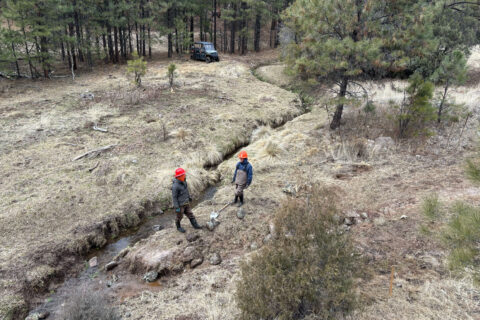
Generally speaking, the bulk of each work week is spent doing trail maintenance, which is then augmented by a special project led by a different Forest Service specialist. For instance, this year we spent four days of the third week doing trail maintenance on the Crest Trail near Rustler Park and the remaining workday that week was spent working with the Range Management staff digging up pipes at Rustler Park to assess the status of the water system.

Saturdays involve some sort of outing or activity in the local area, often with a local resident or expert. In the past this has often involved leaving Rucker Station, but in more recent programs this has meant staying at Rucker and inviting people to travel to us in order to teach a skill or lead an educational activity. For example, this year we invited several folks from the organization Archaeology Southwest to teach students traditional indigenous skills such as making stone pendants and throwing a hunting weapon called an atlatl. They also learned about some of the hidden narratives within public land management such as the ways in which indigenous voices have been silenced throughout US history.

Sundays are a day of rest and provide the opportunity for students to engage in whatever sort of leisure activity they want to, such as going for a walk, throwing a football, or making art. There is also time set aside for cleaning the Forest Service facility and preparing for the upcoming work week.
Wild Arizona’s YCC program includes many rhythms. There are wake-up times, curfews and quiet hours, daily and weekly chores, and regular one-on-one check-ins between crew leads and crew members. These provide the structure around which crew members organize their lives for the summer. Phones are given up at the beginning of the summer and students only get them back one hour each week to communicate with family. As a replacement, crew members are presented with a wealth of opportunities to interact with themselves, one another and the rest of the natural world.

When students age out of the program, they may apply to become assistant crew leads (ACLs), which is a paid internship that teaches leadership, conservation and organizational skills. This year’s assistant crew leads were Cora and Madeleine, who, in addition to performing the typical daily tasks of leading a crew, also completed personal summer projects. Madeleine, for her project, collected family recipes from a handful of crew members and then helped them cook that meal at some point during the program. Cora led crew members and crew leads in making a YCC scrapbook, providing each person a page to artfully display leaves, flowers, trash and other “treasures” found while hiking and working.

The two assistant crew leads were joined by our two crew leads for this year: Dexter and Max. This is Dexter’s fourth year crew leading for Wild Arizona’s YCC program and he brings lots of expertise to the leadership team, particularly when it came to teaching crew members how to cook and helping them navigate interpersonal conflicts. This was Max’s first foray into YCC leadership, but he caught onto things quickly, providing direct and precise communication during morning and afternoon circle-ups, and expert one-on-one coaching of students in conservation tasks such as tread work or digging fire line.

It should be noted that the Forest Service staff at the Douglas Ranger District provides vital support not only during the work week but also throughout the entire six weeks of the program. This support might mean a staff member leading an individual project for a day or two during the work week. Or it could mean swapping out a new tire to replace a damaged one. Or it could look like fixing a broken toilet at Rucker Station. Special thanks is due to District Ranger James Heitholt and his staff for their frequent support and direction throughout the program.

This year’s YCC crew accomplished a slew of conservation tasks, including 4.5 miles of trail maintenance (which serves the dual purpose of improving hiking trails for the public, and increasing access to fire crews and serving as an improved fire break in the event of a wildfire) on the Devil’s Canyon Trail #237, Crest Trail #270, Long Park Trail #42D, and Rock Creek Trail #259. The YCC crew also dug 4,200 feet of hand line in the Dragoon Mountains near Middlemarch Pass, consolidated brush piles for future burning along 1.1 miles of trail, assisted in the construction of reptile and amphibian habitat in the Peloncillo Mountains, and much more. All in all, a great year of good work and good people.

Funding for this program and others like it is more tenuous than ever. We were uncertain of this year’s program being funded until just a few months before it started, and future years remain in question. If you would like to help support future YCC programs through Wild Arizona, please consider donating. To discuss more about what exactly your money would be funding, don’t hesitate to reach out to sam@wildarizona.org.
For Yah’zie, and for every crew member, YCC was more than just a summer job, it was a season of growth, challenge, and joy. We can’t wait to see where their paths lead next.
Happy Trails! —Sam
P.S. Below is a video that crew member Evie put together recapping the summer. It’s fun and you should watch it. (I promise the brown liquid they are drinking “shots” of at one point is just apple cider vinegar.)