Written by Eric Fiorvante, Wild Stew Field Crew Member.
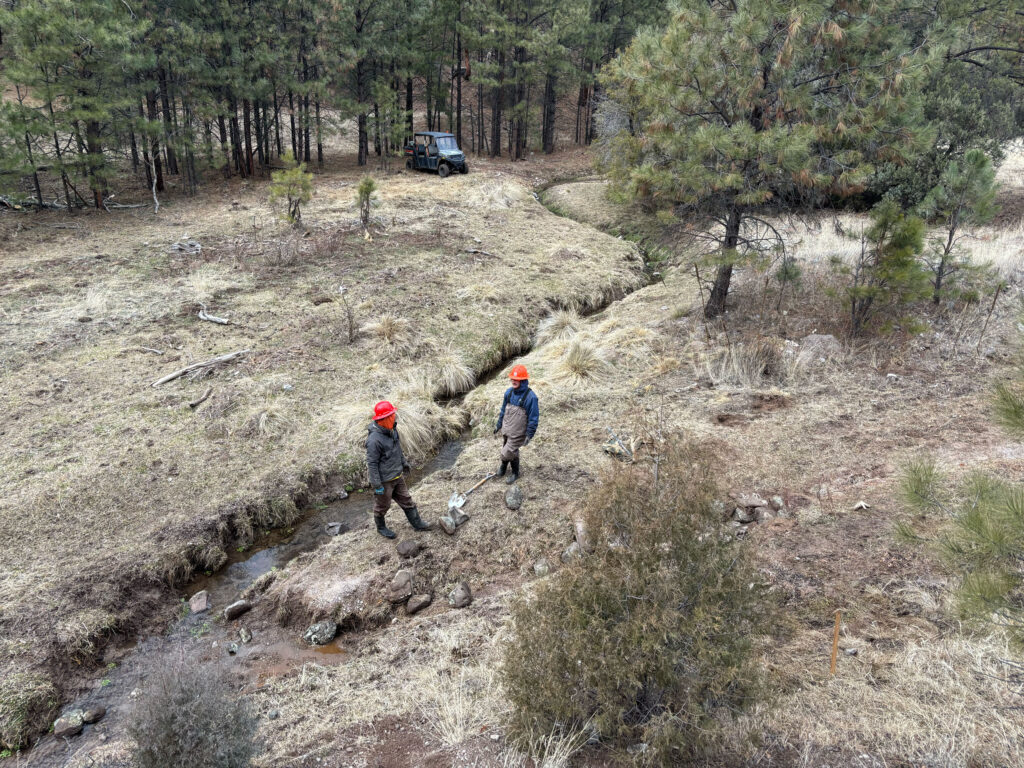
This hitch brings the Wild Stew Field Crew back to Dry Blue Creek, for part two of our stream restoration project. We completed dozens of structures, including log vanes, rock weirs, and rock clusters. The purpose of this part of the project is to stabilize erosion within the stream channel and provide more habitat for native fish.
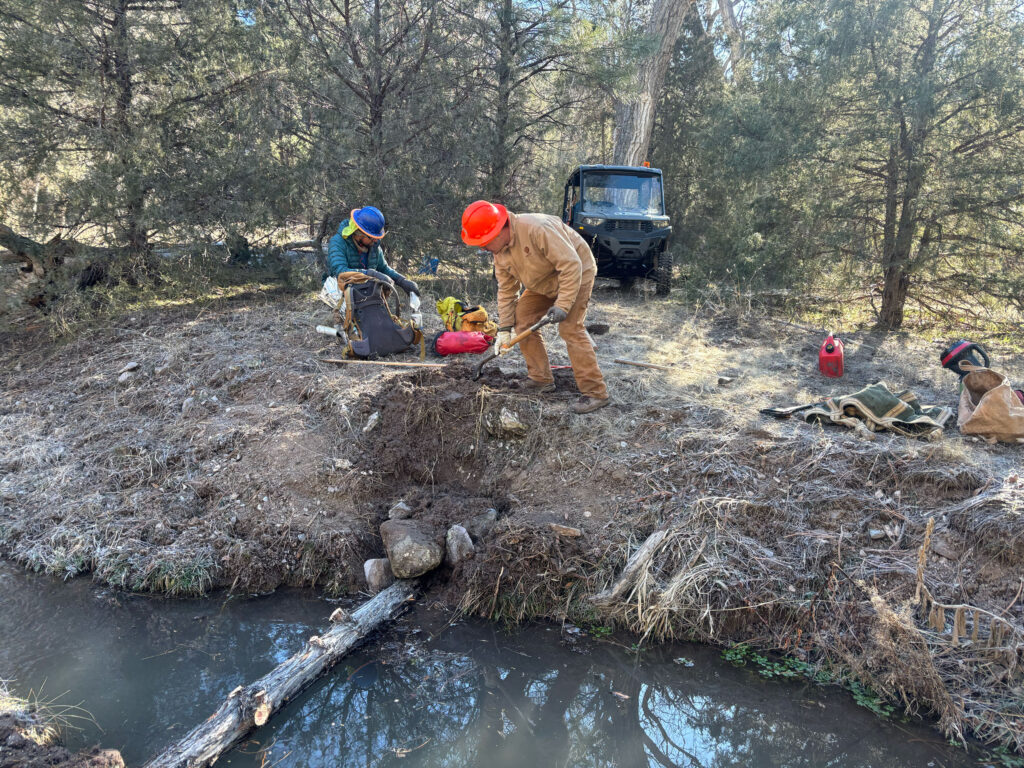
Log vanes are incredibly important to the goal of this project. By setting a log into the ground at a specific angle and slope, flow is diverted away from cut banks and exposed tree roots. Over time, this will introduce more sinuosity to the stream. Material carried by high water events will add to the structure, increasing its effectiveness. Water flowing under some of the logs can scour the surface underwater, creating a pool that provides habitat and shelter for small fish, and the wood structure attracts a more diverse set of insects near the surface of the water, increasing biodiversity.
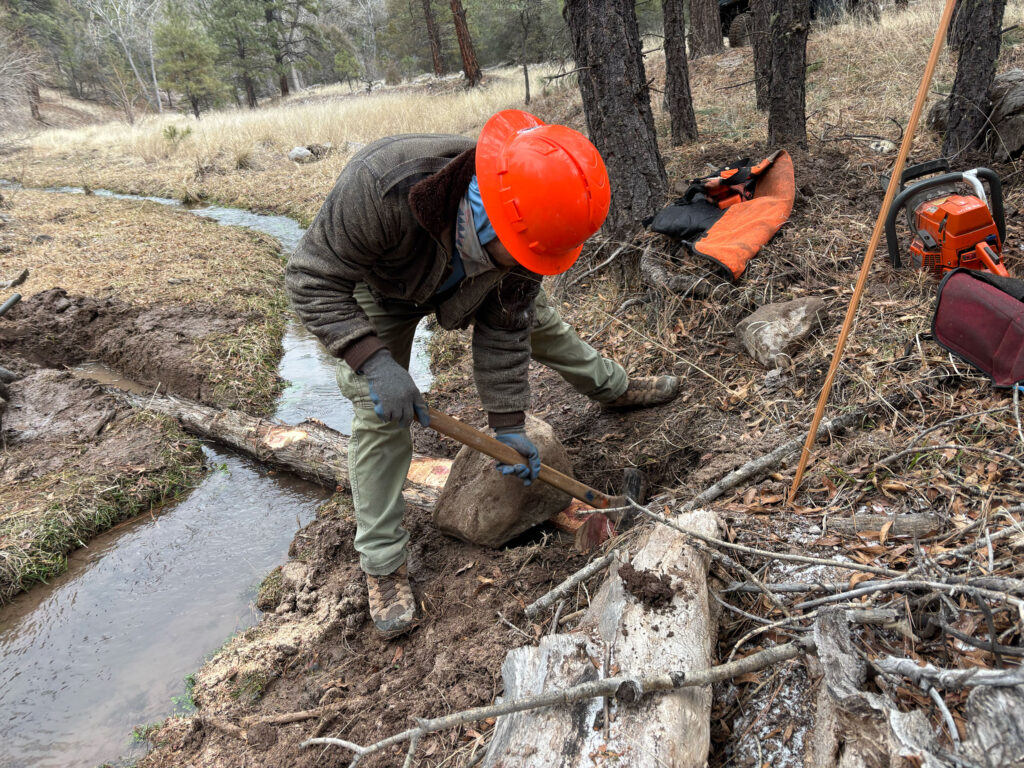
We also utilized boulder clusters, groupings of 2 – 3 mid- to large-sized rocks spaced closely together in the stream channel, often dug partially into the bank and extending at most 1/3 to 1/2 out into the creek. Built as system of multiple structures in a zig-zag on opposite sides along straight sections of stream channel, these both provide fish habitat and shelter, and encourage the water flow to “bounce” from side to side, inducing more meandering into the channel.
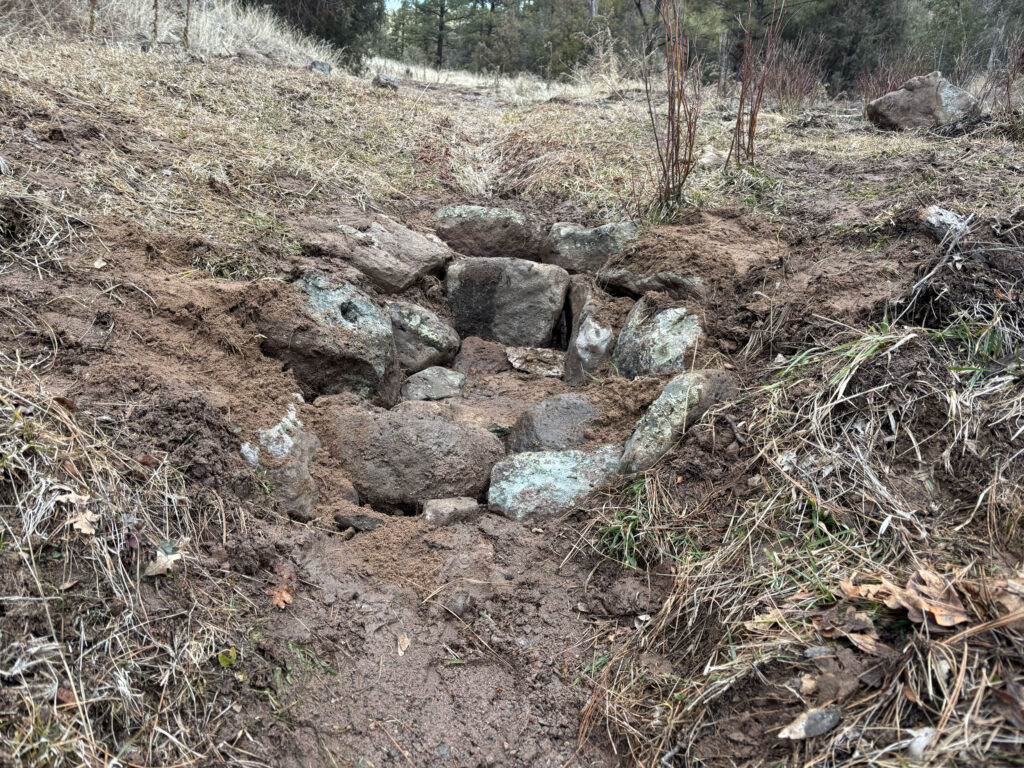
Zuni bowls and mini rock weirs were utilized to prevent head cuts in the stream from eroding further. Starting at a drop in elevation, the force of water flowing over causes turbulence that erodes and over time extends a deepening channel upstream. These rock structures provide armor to the pourover points in order to prevent this erosion from continuing.
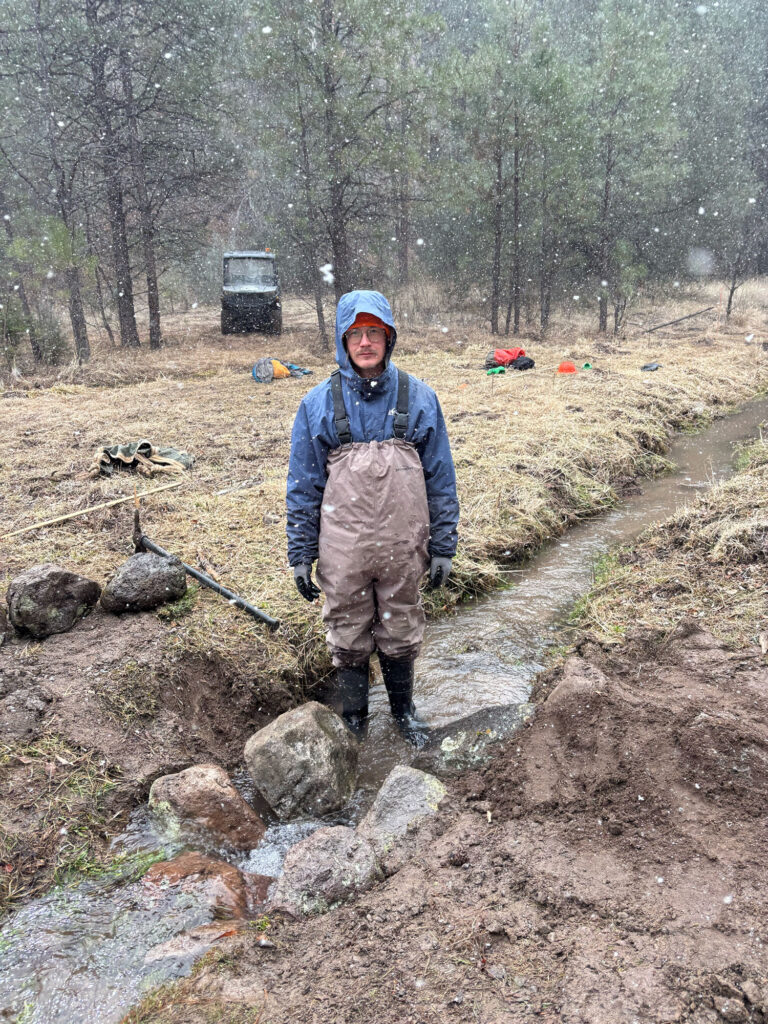
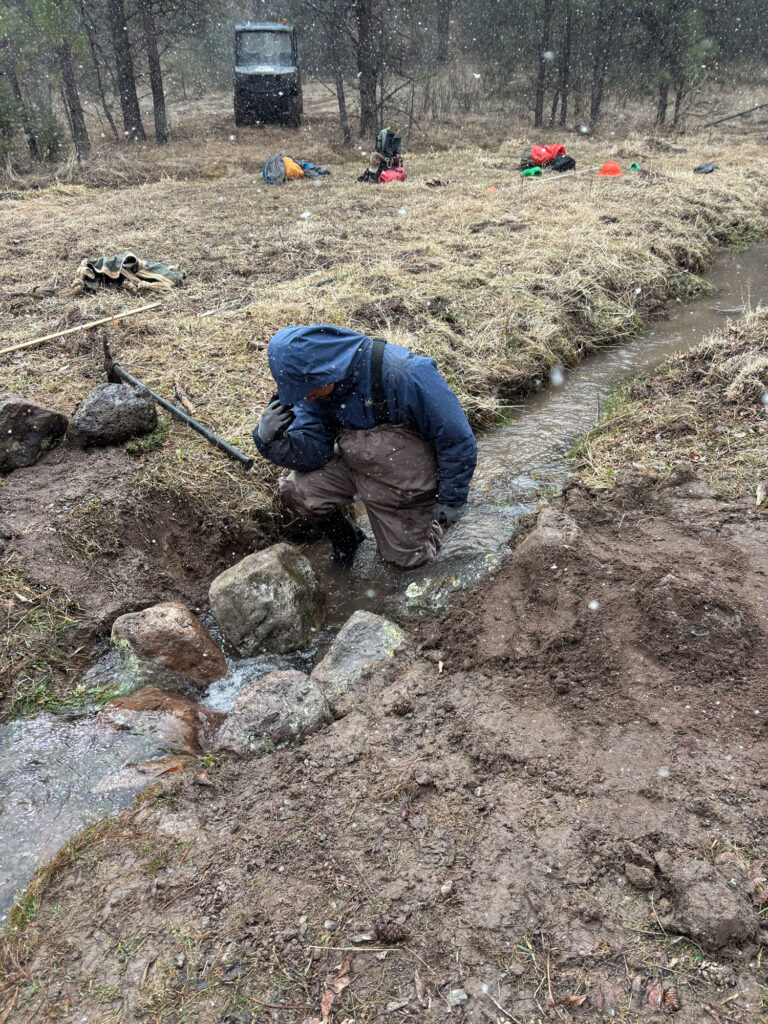
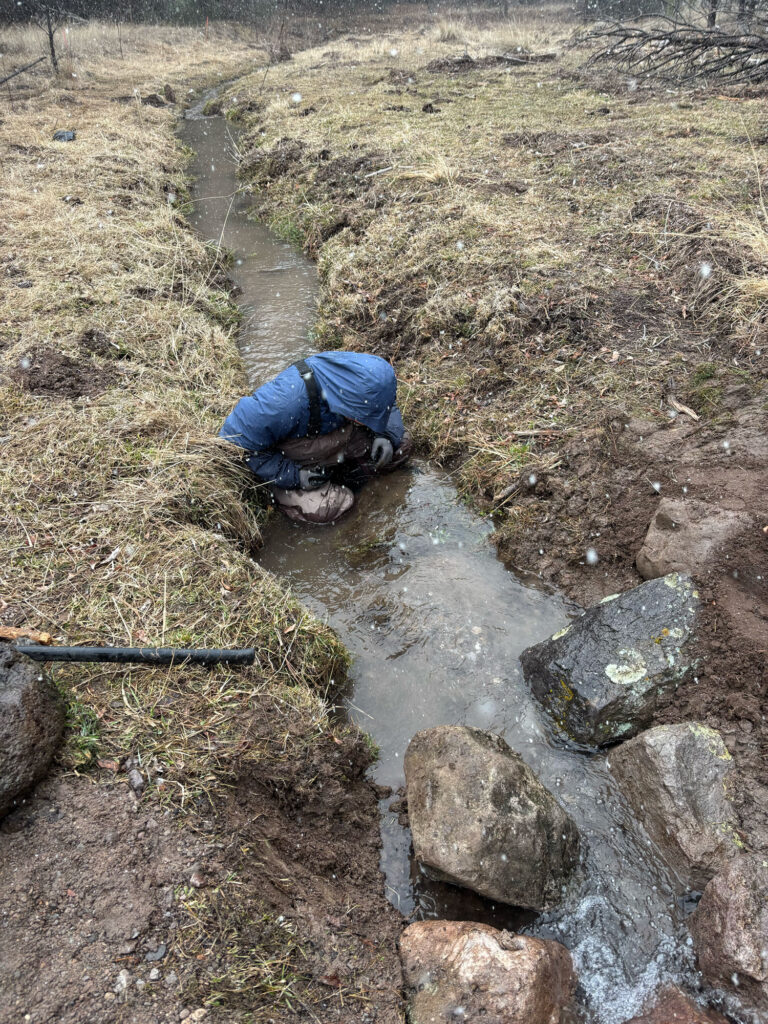
By Sunday morning, we began work on Pace Creek, one of the larger tributaries of the Dry Blue which has perennial water in a portion of it, and continued working in here for the remainder of the hitch. On Monday, several people from the Forest Service came out to look at our work and meet us, though unfortunately there were only a few people to meet them when they showed up, as a cold had been going around, taking people out one or two at a time for a day or two.
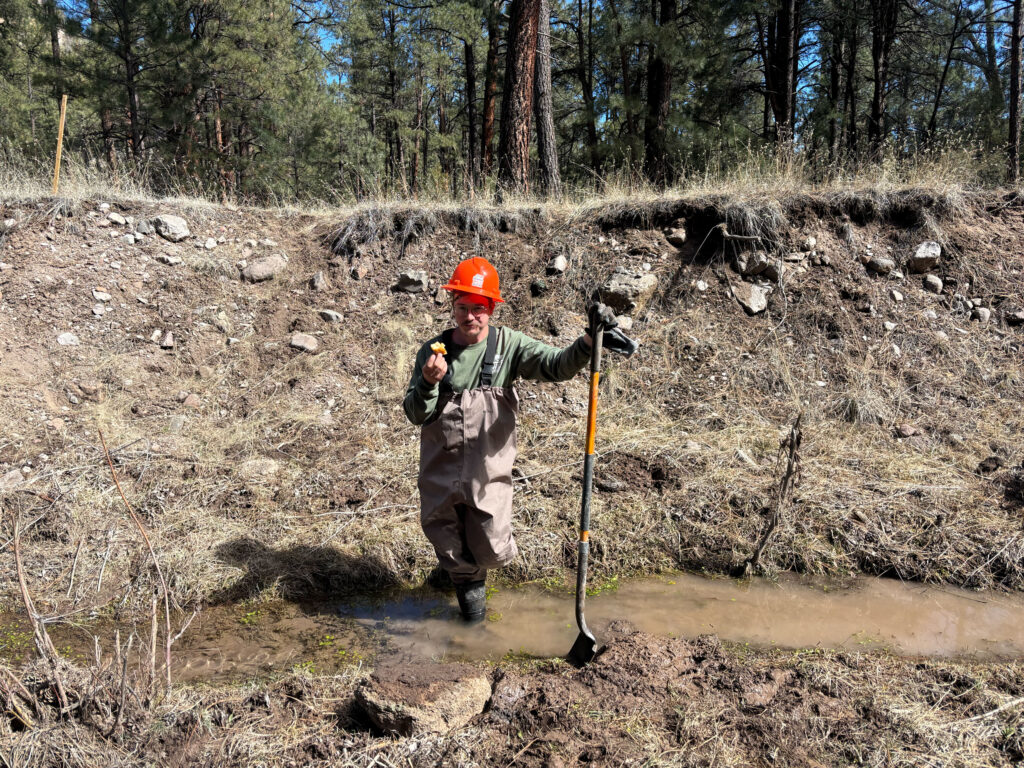
In total, despite everyone getting sick, we built 10 log vanes, 3 mini rock weirs, 27 boulder clusters, 7 zuni bowls, and 1 one-rock dam, completing all currently planned in-stream structure building for this project. We’ll be back for more meadow restoration and willow planting in the future, so stay tuned!