January 2026
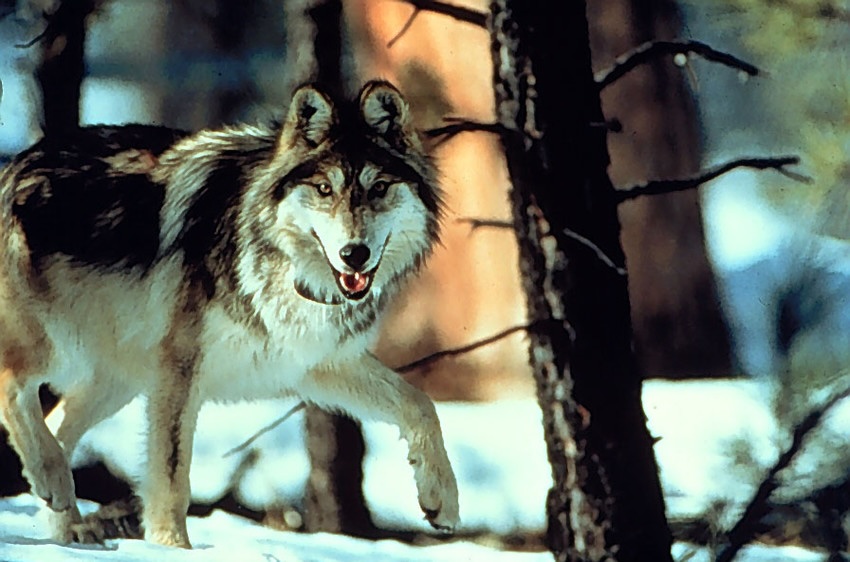
There is an all out assault on the recovery of the endangered Mexican gray wolf (Canus lupus baileyi) brewing at both the Federal and State levels here in Arizona. Despite the lobos’ status as an endangered species that is still experiencing habitat fragmentation, genetic peril, and death at the hands of humans. State and federal delegates from Arizona are keen on eroding the progress made in their recovery.
There has been a steady increase to an estimated 286 wolves in the wild, but this number belies the true distance between their current status and how a healthy, recovered population would look.
Federal:
U.S. House of Representatives member Paul Gosar has introduced a bill H.R. 4255, the erroneously named “Enhancing Safety for Animals Act of 2025”, that would strip endangered species protection from the Mexican gray wolf, federally delisting them from consideration as a threatened or endangered species. It has a further toxic provision that would hold Mexico out of any consideration of the recovery for the lobo. This in turn would split recovery along country borders though animal populations have no knowledge of or say in these borders. It would neglect the vast majority of the Mexican gray wolves’ native range, condemning their recovery to an artificial boundary in even less accordance with the best available scientific evidence than their current management boundaries.
This bill has made it out of committee and is waiting to be heard on the House floor. Wolves need you to call your federal representatives and tell them not to abandon this endangered animal.
If this bill becomes law, Mexican gray wolf recovery may be irrevocably harmed and decades of recovery could come to a halt.
Arizona State:
A trifecta of malfeasance in regard to lobos is proposed within our state legislature. The three bills: HB 2158, HB 2159, HB 2160 individually and collectively aim to put lobos in the crosshairs of hunters and the ranching industry with no acknowledgement of the true recovery status of the wolves into the future. Let’s break down the bills in turn:
A seemingly innocuous change of the state’s definition of “predatory animals” would add ‘bears, cougars, mountain lions, and wolves’ to an already existent list of foxes, skunks, coyotes and bobcats. These animals all serve the ecological function of predators but the state’s use of the term paves the way for sportsman licenses to kill these animals regardless of the critical role top level predators enact within their resident ecosystems.
It would also open the door for predator eradication efforts from federal bodies including Wildlife Services, should federal protections for the lobo wane or disappear.
This one’s a doozy and counteracts federal law. HB 2159 would allow the Arizona Department of Game and Fish to issue permits to landowners to ‘take’ (either trap or outright kill) Mexican gray wolves. It also opens up leasees of public lands allotments to shoot and kill wolves on the land they are allotted to graze. That’s right, it would give those who already benefit by using your public lands to prop up their private business a method to seek out and kill Mexican gray wolves in the wild. This is in spite of the fact that the bill flies in the face of scientific best practice for species recovery and for long term health for both the wolves themselves and our state’s wild lands, your public lands.
It would also allow the AZDG&F to set up sportsman licenses to hunt wolves. These wolves are in extreme genetic threat: as any two wolves are about as related as a brother and sister, but hey, why not shoot first and ask questions later?
This bill prepares for state management of the Mexican gray wolf population by establishing a nine member ‘Mexican Wolf Management Committee’.
That sounds alright, oversight is important after all. Of course this committee’s listed functions are to manage for
- Hunting licenses to kill lobos
- Protecting cattle from wolves (which is already taking place) and compensating ranchers for their past actions in managing the wolf population… sounds like a payout
- Creating methods for nonlethal deterrence and humane treatment of wolves
No mentions are made for the committee to consider the population status or genetic health of the wolves. There are already existing programs to help with deconfliction and humane treatment. Addition to and maintenance of such programs are welcome but belied by the first provision to put wolves in front of the barrel of hunters weapons. And the nebulous nature of the second provision, compensating ranchers for their past actions, seems like an open invitation for state money to be funneled to cattlemen for past actions they didn’t like regardless of scientific evidence to the contrary.
And who would sit on this committee? Well HB 2160 makes clear a power sharing agreement with the 9 seats of the committee being assigned to 3 cattlemen, 3 sportsmen (hunters) and 3 conservationists. Of course scientists are nowhere to be found and despite the apparent fairness of a compromise the constituency of these groups is far from balanced.
Arizona has over 7 million residents. According to polling by Colorado College’s Conservation in the West Poll 66% of Arizonans are against the reduction of protections for endangered wildlife. This number is likely lower than those who may call themselves conservationists, but let’s go with it. From the same poll, 33% of voters say they are hunters or anglers, let’s say that extends to the entirety of the state. Ranching numbers are harder to find, but according to a University of Arizona report from 2022, there are 4,561 cattle ranches/farms across the state, which indicates its a minimal share of the voters within the state. For context, all farming in Arizona only accounts for 0.4% of the state’s Gross Domestic Product (GDP) and that’s from 16,710 farms (so ranging is not even a plurality).
Assuming all the groups are mostly mutually exclusive (which they’re likely not) we then get a committee with 3 seats available to over ~4.5 million conservationists, 3 available to ~2.5 million hunters/anglers, and 3 seats for what will likely be the owners of ~4,600 ranchers across the state. Such a power sharing arrangement would enshrine industry capture by ranchers and marginalize those voices who speak for the wildlife that cannot speak for themselves, it’s undemocratic and unacceptable.
________________________
Federal and state level efforts to erode the conservation of our endangered wolves is underway. The goal is to push monetary gain to ranches who already benefit from a slew of programs to aid them, to sideline science and the wellbeing of wildlife, and to incentivize hunters to kill wolves when doing so would erode the efforts to preserve Arizona’s wild nature and disregard to will of the people to protect our lobos.
You can take action now to prevent these dangerous bills from becoming law:
Federal:
State of Arizona:
Find and call your State House Representative and tell them to vote no on HB 2158, HB 2159, HB 2160.