Written by Sage Bradford, Wild Stew Field Crew Member.
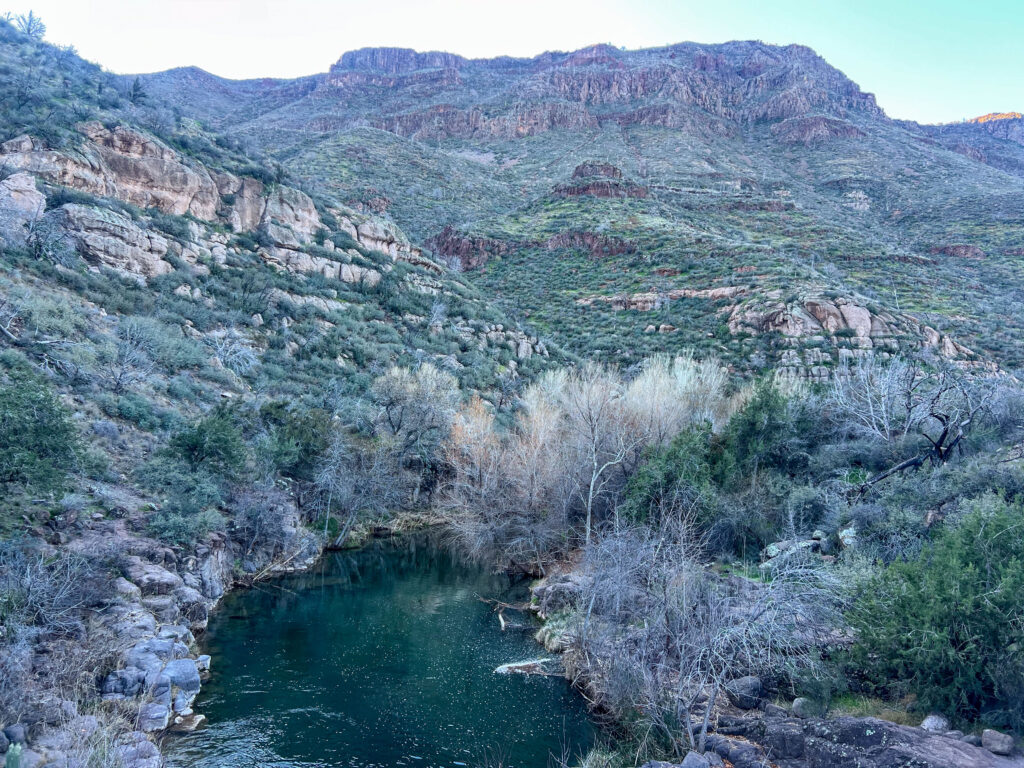
For our first hitch of 2026, we were back in Fossil Creek. This hitch was part of a long term riparian restoration project in conjunction with Friends of the Verde River and the Coconino National Forest. Our mission was to find and eliminate the invasive species Arundo (common name: Giant Reed) and Tamarisk (common name: Salt Cedar). Both of these non-native plants outcompete native species and degrade the ecosystem. In particular, Arundo and Tamarisk are notorious for consuming copious amounts of water and disrupting wildlife habitat.
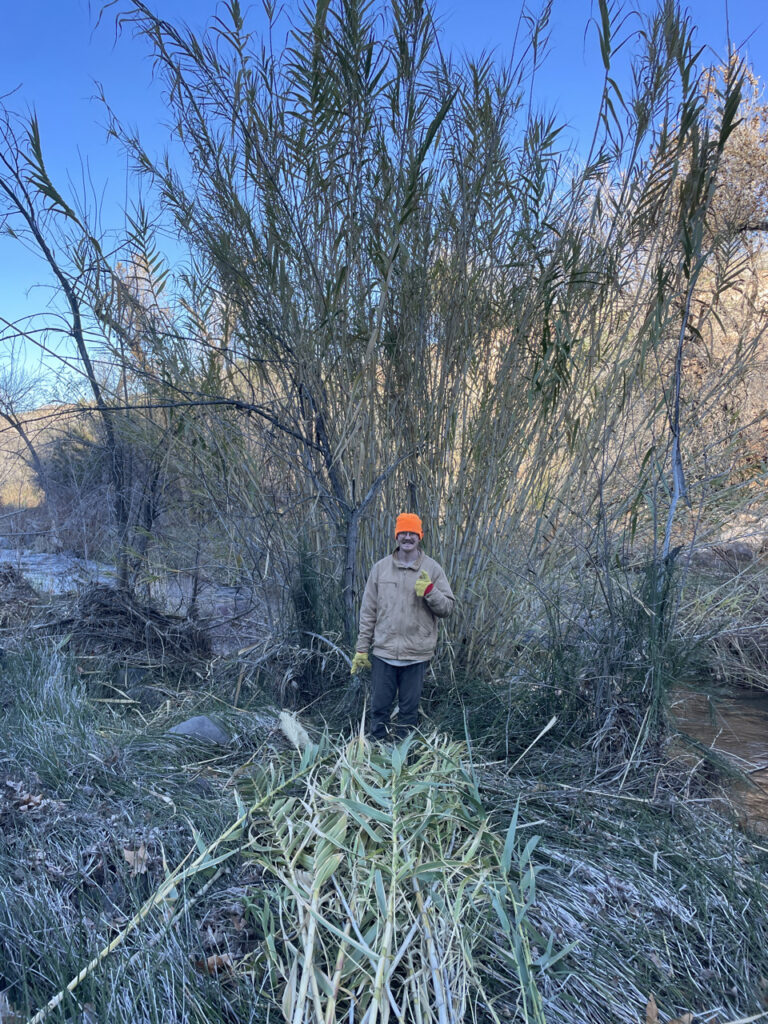
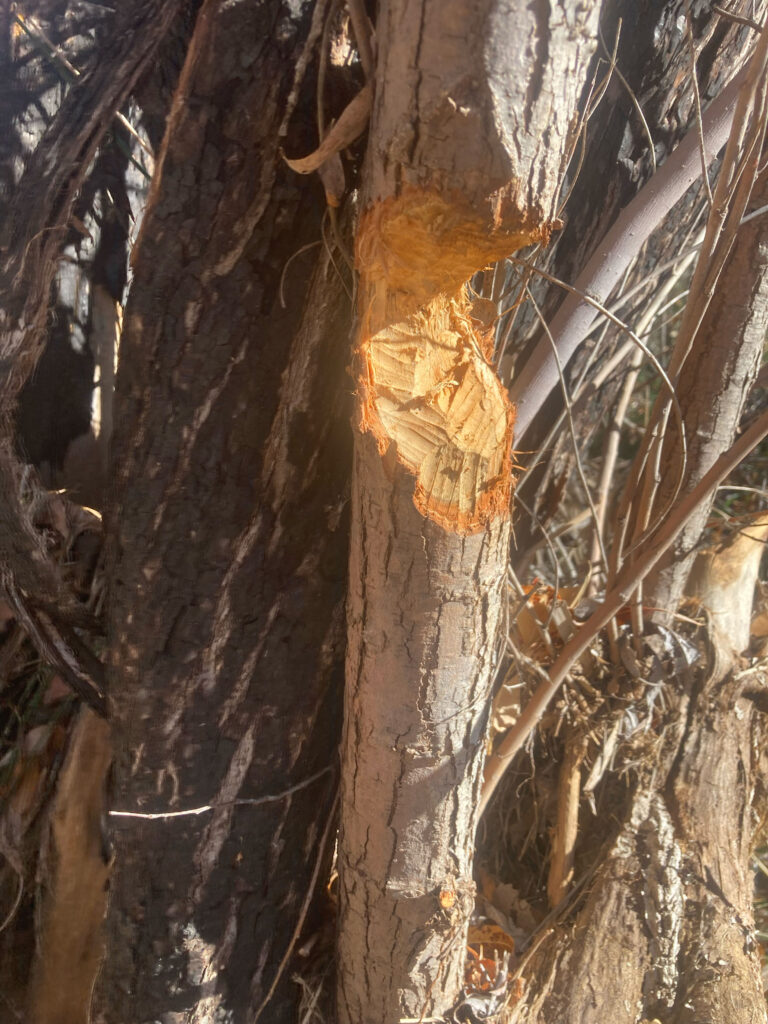
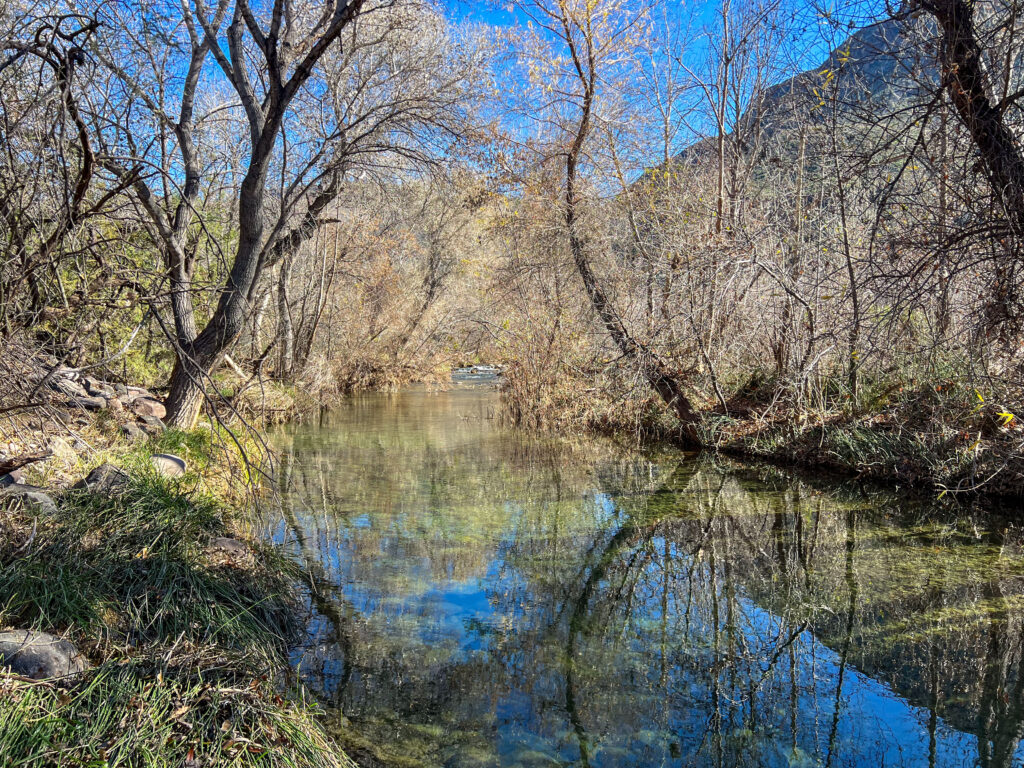
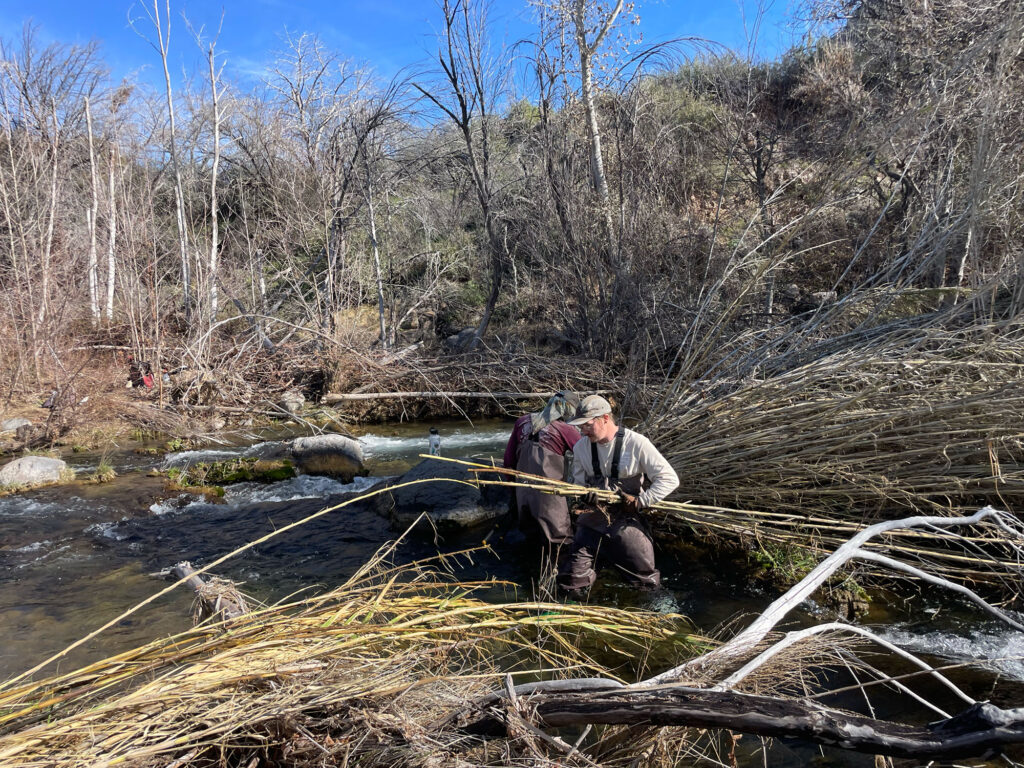
To eliminate these plants, the crew spent their full hitch wading down Fossil Creek. Any patches found were logged via the Field Maps app, cut at the stump, and then each cut stem treated with herbicide. Slash was then brought to higher elevation where it could dry out above the flood line and not resprout. It is important to do herbicide treatment this time of year as that is when the plants are actively moving sugars down to their roots for winter storage. Thus, the herbicide translocates effectively and kills the entire root system, leading to better control with less regrowth in the spring.
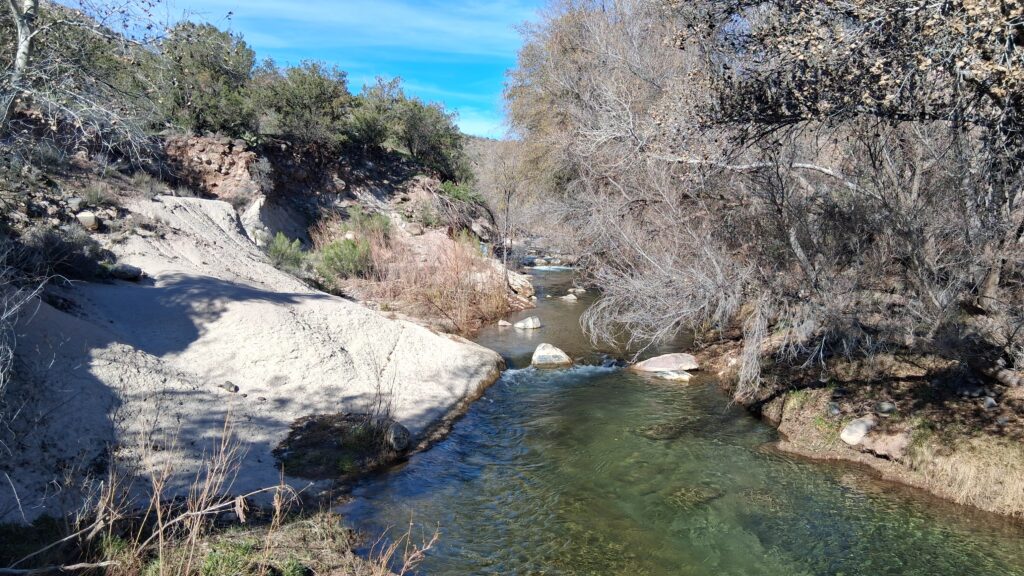
This was my second time spending a hitch in Middle Fossil. Dexter and I were previously there in November 2023. Much of what we treated this week was re-treatment of 2023 patches. While some of the treated Arundo patches from 2023 did not regrow, many did — though often in smaller patches and less dense. Luckily, none of the tamarisk from 2023 seemed to regrow. In fact, there was very little tamarisk at all. The crew only found 3 small Tamarisk plants (each about 1” in diameter). The rest of the treatment was Arundo. By the end of the week, we had cut and treated 3,100 Arundo stems along 4.6 miles of Fossil Creek.
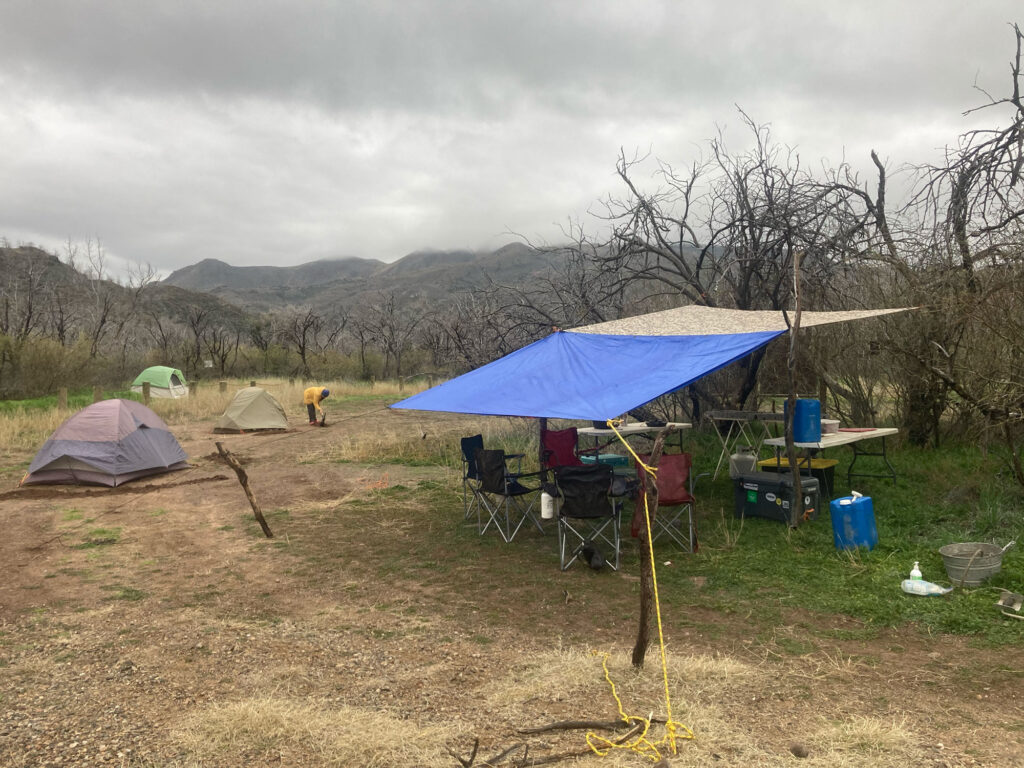
With the exception of one rainy, sleet filled day on Thursday, the weather was quite lovely for this hitch. The crew even went for a swim in Fossil during an afternoon break. The evenings were chilly, but the stars from camp were excellent. One evening, I spotted 5 shooting stars within an hour!
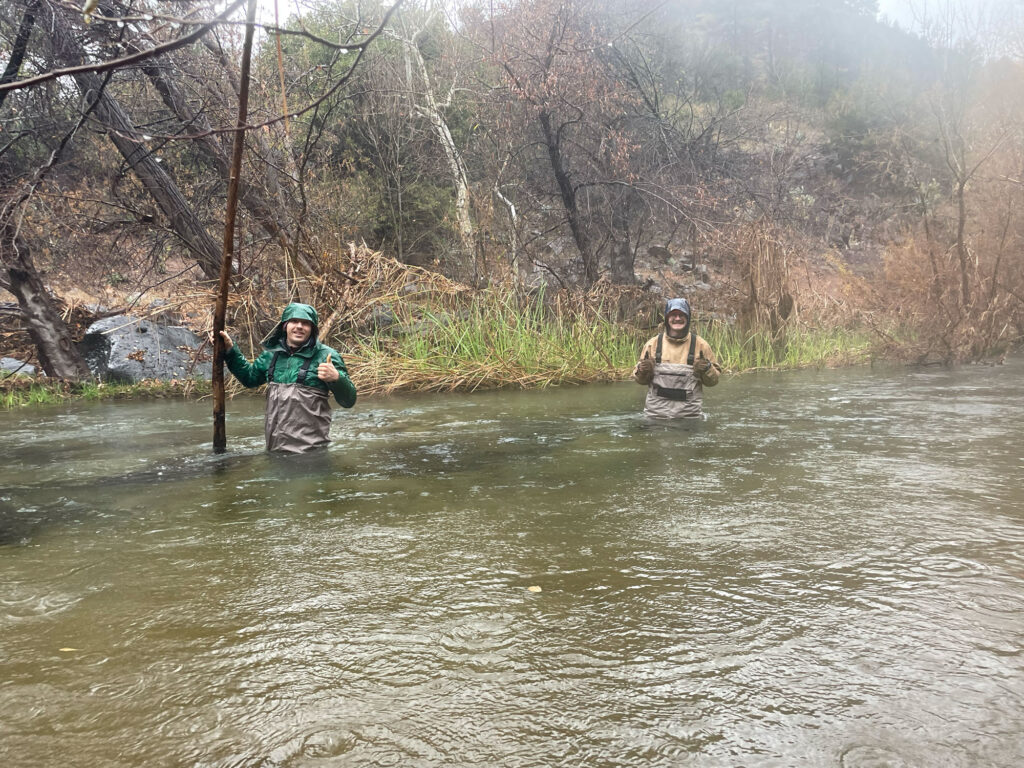
Working in Fossil Creek can often be hard. There is no shortage of challenges. There is wading chest deep through the swollen post-rain creek, just nearly avoiding over-topping your waders. There is bushwhacking and getting stabbed by plants with every step. There is falling into a secret hole hidden under leaves over and over again. There is scrambling up a rock face. There is spotting Arundo growing in the center of the creek and having to create a four person fireline to get the slash out of the riparian regrowth area. Often, I find myself being tested in Fossil. Yet at the end of the day, I’m proud of the work Wild Arizona does in Fossil. I’m happy I get to be a small part of a great conservation effort.